By Toyin Falola
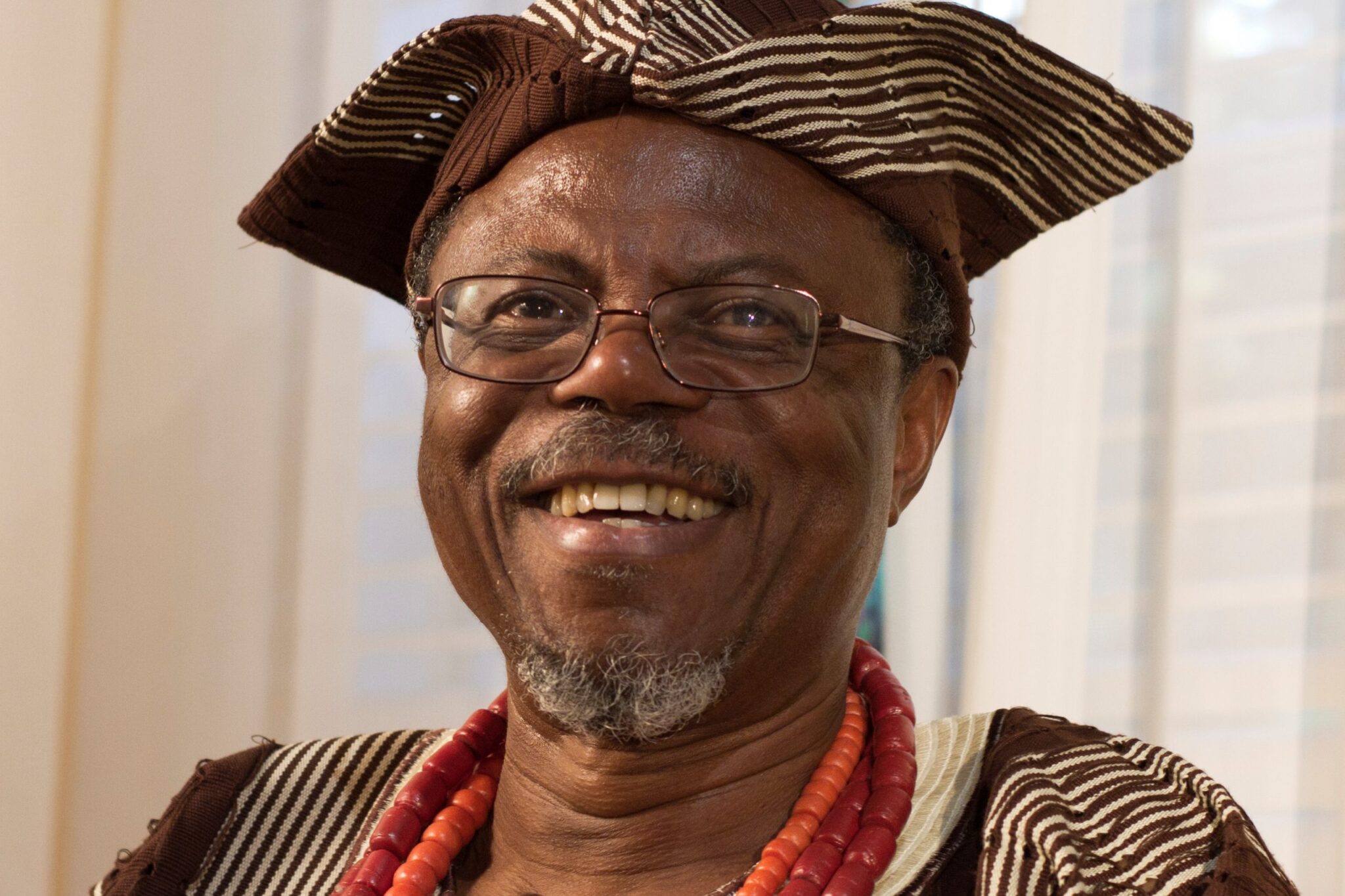
I am delighted to congratulate Professor Julius Adekunle for receiving the 2026 Kwame Nkrumah Award for Service to Pan-Africanism from the University of Texas at Austin. The award goes to an African who has contributed in veritable ways to the realisation of the vision of African unity and development both at home and abroad. The awardee must be a person of integrity, dedicated to the social and political progress of African nations, and committed to the task of fostering African unity both in words and actions.
If we were to mention scholars whose research traverses continents and disciplines, Professor Julius Adekunle’s name is solidified in the annals of history already. As a trained historian who drank from an intercontinental pool of knowledge, studying in Canada and Nigeria while professionally reestablishing himself in the United States, his career is an intersection of local and international affairs. The educational background of this individual, spanning from his days in Nigeria all the way to his employment at Monmouth University, clearly shows how easily he has been able to contribute to the globalization of African history. His expertise in African political history and culture has placed him in the position of an expert on the theoretical basis of historical importance in modern Africa.
Topics dealing with Nigeria’s federalism often centered on problems of national integration, political leadership, and nation building, while texts concerning diaspora and race allowed his works to reach further than Africans and people of African descent. Professor Julius O. Adekunle’s legacy has been one that could be summed up by his impact on teaching, research, and humanity as a whole. One may begin by pointing out that Professor Adekunle started his teaching career in Nigeria at St. Andrew’s College of Education (Oyo) before leaving to further his doctoral research in Canada. This still shows that he gained some level of international experience as a teacher early on by serving first as a teaching assistant and later as an adjunct professor for Dalhousie University and St. Mary’s University, respectively. After completing his doctorate, Adekunle would find a home at Monmouth University under the Department of History and Anthropology in 1996. There, he would build a career that saw him rise through the ranks of academia from his original hiring as an Assistant Professor to Full Professor. He regularly fills necessary administrative and mentorship roles for the university; his role as Director of the Graduate Program and influence in the development of the African Diaspora Studies program speak to this.
One of his central research concerns is the dynamics of governance, democracy, and leadership in Nigeria, and his interrogations of how colonial legacies, ethnic divisions, and political institutions shape contemporary state structures and challenges of national integration. This analysis can be easily drawn from his studies of Borgu and the Yoruba and his examinations of how these communities construct political and cultural identities over time, stating the role of memory, migration, and interethnic relations. His research is a specimen for minority politics as well as the intricacies of nation-building, most especially in a multi-ethnic society.
Another major standout theme of his work is the relationship between religion and politics, that is, how religious beliefs and institutions influence political behavior: fostering peace and, at the same time, contributing to chaos and national instability. His books, Politics and Society in Nigeria’s Middle Belt: Borgu and the Emergence of a Political Identity and Culture and Customs of Rwanda, demonstrate his ability to engage local and wider audiences. While the former provides a detailed analysis of identity formation and Nigeria’s political structure, the latter extends his reach into comparative African studies.
Adekunle’s work on “Politics and Identity” explores the historical development of political identity in Borgu, northwestern Nigeria. It traces the region to the precolonial times and the 19th century with a view to emphasizing how local political structures evolved before and during early colonial intrusion. One of the central arguments was that Borgu’s political identity was sharpened by dynastic systems led by the Wasangari ruling class. The book also argues the role of trade networks and migration, and the influence of Wangara merchants in strengthening economic and political organization. The author describes how outside forces (or relations with neighboring states, such as those of the Yoruba or European imperialism) influenced Borgu’s domestic policies. Adekunle summarizes that perhaps one cannot fully grasp the political consciousness of the Middle Belt without accounting for particularistic histories, such as Borgu, where trade and government influenced societal development.
Adekunle’s focus on Rwanda begins with a disagreement about culture and customs. His disagreement allows the readers to learn about Rwanda’s extensive cultural and social history that existed prior to the 1994 genocide. While trying to provide Rwanda with new light, he begins with a geographical introduction about the country. He describes Rwanda as an agrarian society that was affected by German and Belgian colonization. Even through various political turmoil, the culture of Rwanda has stayed relatively cohesive. Some aspects of the Rwandan life explored by Adekunle are religion. According to him, the belief system in Rwanda is a mixture of old traditional beliefs with Christianity. Secondly, the role of stories in the retention of history and identity through oral traditions, literature, and the media is elaborated upon. Another major aspect of Rwandan culture relates to the type of Rwandan family and society in terms of gender, bride price, and family values.
It should be said without any hesitation that Prof. Adekunle is one of the key persons engaged in the global debate concerning Africa and its diaspora. Indeed, his efforts both in and out of the classroom have proved him to be a good lecturer as well as a recognized scientist. The many years-long academic career of Prof. Adekunle is marked by many conferences held around the globe. It is because of this factor that he has managed to influence the current discourse concerning Africa’s past, present, and future. In addition to his endless contributions to historical research, he has utilized his talent on editorial boards of academic journals and taken on leadership roles in scholarly publishing, which is a recognition of his contributions and a commitment to shaping the direction of African studies.
Aside from his academic achievements, Professor Adekunle’s genuine creativity and love for poetry cannot be underestimated. His passion for creative writing, as seen in his collection, “I Want to Know: Inspirational Poems,” reveals an expressive side of his personality, where themes of hope, self-discovery, and human experience are paramount. This creative output can be said to complement his academic focus on culture and identity, perhaps from a more personal and philosophical perspective. While his academic and social life are paramount to this essay, his spiritual life is equally significant. As an associate pastor, he has always been active in religious leadership and community service. His writings on faith, prayer, and spiritual reflection align with his academic interest in the intersection of religion and politics.
The blueprint of Professor Adekunle’s success in academia is not only tied to his research but also to his commitment to mentorship and academic community building. His career has produced an academic ecosystem where young scholars thrive. All that he does through mentoring students or institution building, such as developing curriculums and inter-disciplinary courses, falls under the umbrella term of nurturing many generations of scholars. His contributions towards the research and its relevance in the current world, where the discussion on governance, identity, and inequality issues in Africa is very much ongoing, can be considered relevant, especially because the debate on African nationalism, ethnic conflict, and globalization continues.