By Toyin Falola
He writes as if ink were conscience,
as if each sentence were summoned
from the tribunal of truth—
not borrowed, not softened, not sold.
In a land where silence is often safer,
He chooses the harder grammar of courage,
arranging words like witnesses
who refuse to forget what they have seen.
Chido—
Your name moves through corridors of power
not as a whisper,
But as a question that will not kneel.
You have made journalism a moral archive,
each column a ledger of accountability,
Each argument is a quiet rebellion
against the easy amnesia of nations.
You do not write to decorate history—
You interrogate it.
You do not flatter the present—
You unsettle it.
In your prose lives the stubborn clarity
of one who knows
that truth is not neutral,
that justice has a vocabulary,
and that language, when sharpened,
can cut through the fog of power.
Like the griots of old,
You remember for us—
But you also warn,
You insist,
You provoke the future
to answer for the present.
For the committed intellectual
does not measure success in applause,
but in the trembling of falsehood,
in the discomfort of the powerful,
in the awakening of those
who had forgotten how to question.
And so you write—
not because it is easy,
But because it is necessary.
Nigeria listens,
even when it pretends not to!
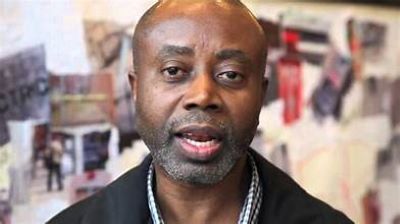
Dr. Chido Onumah was born on 10th April 1966. He was born at a time when the nation was walking the path of identity formation for national interest and development. To many outside the immediate family, the birth of Chido was just one of the many deliveries—nothing outside the ordinary. And now, sixty years since birth, Chido’s life speaks volumes not as a mere recount of professional achievements, but one of sustained identity for justice, accountability, and truth advocacy. To celebrate him at 60 is to appreciate a man who has consistently chosen the uncommon—the uncommon route of truth-telling, institutional engagements, and principled engagement along the corridors of power.
Chido had his primary education in the Army Children School, Apapa, and attended Awori Ajeromi Grammar School for post-primary education. He had his undergraduate studies at the University of Calabar, where he graduated with a Bachelor of Arts degree in Philosophy in 1991. It was at this point that he began to develop a strong affinity for analytical reasoning, ethical engagements, and thoughtful criticism. These core values would later define his distinctive journalism and advocacy style.
Upon graduation, he enrolled at the University of Ontario, Canada, to pursue a Master of Arts degree in Journalism in 2002. As a university student, he won the Jerry Rogers Writing Award and the William C. Heine Fellowship for International Media Studies. He did not immediately pursue his deed. It was not until 2019, that he crowned his academic pursuits with a Ph.D in Communication and Journalism from the Universitat Autònoma de Barcelona. Chido is not just particular about practice; he is equally committed to scholarship within his chosen profession.
During the formative years as a professional, Chido was a familiar face in newsrooms across Nigeria and West Africa. He was a trainee at The Guardian in Lagos. He was a political and human rights correspondent for Sentinel and The News at a time when journalism in this field required courage. He was the Associate Editor for Weekly Insight in Ghana and a member of the coordinating team for the West African Human Rights Committee, where he led investigations into human rights violations and mobilized support campaigns for detained journalists and political prisoners. Almost at the same time, he corresponded for Africanews Service in Nairobi, Kenya, and was the Africa Observer in New York. Chido’s formative years were intentional towards building a purposeful career.
By the early 2000s, Chido had successfully transitioned transnationally. At the Panos Institute in Washington, D.C., he oversaw Africa Programs, with responsibility for shaping journalism curricula and training emerging reporters in conflict, diversity, and human rights reporting. He built a synergetic work relationship between African and Caribbean journalists working on HIV/AIDS. The synergy was to ensure early reporting for quick intervention.
He returned upon the inauguration of the nation’s anti-graft agency. He joined the Economic and Financial Crimes Commission (EFCC), where he led the Civil Society Unit and coordinated the Fix Nigeria Initiative. At the EFCC, Chido worked as a member of an institution within a society seeking to develop anti-corruption agendas through training journalists in investigative reporting, ethics workshops, strategic partnerships, and collaborations with youth groups, women’s groups, faith-based organizations, and concerned professional bodies on integrity and accountability. He was critical in producing drafts and templates that translated complex international anti-corruption laws into accessible tools for citizens. His work was a blend of governance work and public education.
Between 2008 and 2010, he served as Research Assistant to Mallam Nuhu Ribadu at St Antony’s College, University of Oxford, and later at the Center for Global Development in Washington, D.C. Throughout this period, his support for anti-corruption advocacy remained relentless globally. He wrote speeches, prepared reports, and contributed to money-laundering cases against politically exposed persons.
Yet, if there is anything that consistently defines Chido’s global footprint, it is Media and Information Literacy (MIL). In 2004, he became the Coordinator of the African Center for Media & Information Literacy in Abuja. In this capacity, he champions a team of dedicated individuals in pushing for informed citizen participation in politics, aiming to build a culture where citizens can critically assess, analyze, and create information.
Chido is a global leader. As Co-Chair of the Global Alliance on Media and Information Literacy (GAPMIL) and Coordinator of the Pan African Alliance on Media & Information Literacy (PAMIL), he has worked closely with UNESCO country offices and ministries of education to develop policies and curricula that fit MIL into institutional education systems. As a consultant to UNESCO in Paris since 2010, he has been critical to the development of global MIL policies and indicators, effectively representing Africa within global contexts. Since 2010, Chido has served as Graduate Assistant and Visiting Lecturer at the Universitat Autònoma de Barcelona, teaching travel journalism, multiculturalism, international reporting, and media literacy. Out of the classroom, Chido has robust volunteer commitments. He is a Board Member of the Whistleblowing International Network (WIN), promoting whistleblowing, protecting whistleblowers, and reestablishing public trust. At the same time, he promotes cross-cultural learning and digital inclusion initiatives at the World Computer Exchange Initiative.
His bibliography reflects Nigeria’s contested journey. Starting with Nigeria is Negotiable to We Are All Biafrans, and then Time to Reclaim Nigeria to Remaking Nigeria: Sixty Years; Sixty Voices, his works ride along the complexities of nationhood, democracy, and the unfinished business of justice. He has edited volumes on children, youth, journalists, and public intellectuals.
Chido is a recipient of many awards, including the Kudirat Initiative for Democracy Award for excellence in journalism and the Clement Mwale Prize for courage, as well as various academic distinctions in Canada. At 60, Dr. Chido Onumah is a testament to a purposeful life. He has demonstrated that consistency over time breeds excellence and drives reform through effective journalism and advocacy.
Happy 60th birthday, Chido.