By Kayode Adebiyi, News Agency of Nigeria (NAN)
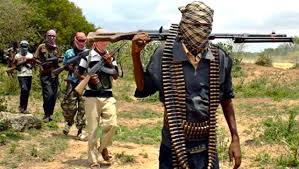
Since official campaigns for the 2027 General Elections began on Aug. 19, a wave of political violence has raised concerns about the safety of candidates, supporters and voters across Nigeria.
Attacks on political convoys, disruptions of campaign meetings, assaults on journalists and reported fatalities have overshadowed discussions on policies, governance records and development programmes.
From Benue and Edo to Enugu, Oyo, Ebonyi, Ekiti, Cross River, Delta, Katsina, Sokoto and Lagos, incidents of political violence are testing the country’s democratic institutions ahead of the elections.
Beyond the immediate security implications, the incidents have raised a fundamental question about whether Nigeria can guarantee credible, inclusive and peaceful elections when political participation is increasingly threatened by intimidation and violence.
The concerns are reinforced by recent findings of the Centre for Democracy and Development (CDD-West Africa), which has been monitoring security developments ahead of the 2027 elections.
Its October 2026 Nigeria Election Security Tracker recorded 16 election-related incidents during the month, compared with 14 in September and six between Aug. 19 and Aug. 31.
The report showed that attacks on campaign gatherings and convoys accounted for 11 of the 16 incidents recorded in October, while two involved assaults on individuals, two targeted property and one restricted a political gathering.
Two people were also killed in attacks involving Nigeria Democratic Congress (NDC) campaign activities in Enugu and Ebonyi, according to the report.
Although overall security incidents declined from 222 in September to 173 in October, election-related incidents increased by about 14 per cent.
The report also recorded 640 deaths from all categories of insecurity in October, compared with 396 in September.
However, 638 of the October deaths resulted from broader insecurity rather than election-related violence.
These figures highlight the need to distinguish between political violence and Nigeria’s wider security challenges, while recognising that both could affect the conduct of the elections.
The geographic spread of campaign-related incidents and their impact across political divides have also heightened concerns about political intolerance and the safety of democratic participation.
The scale of the concerns has prompted interventions from political leaders, civil society organisations and other stakeholders, although partisan accusations have continued to complicate efforts to address the problem collectively.
In a statement issued by the State House on Nov. 13, President Bola Tinubu condemned the violence accompanying political activities and directed security agencies to confront perpetrators.
“I have followed recent reports of violence accompanying political events in different parts of the country.
“Every form of violence stands condemned. Violence should never have a place in our political campaigns as we move toward the 2027 general elections.
“We shall not tolerate any irresponsible conduct by politicians and their supporters. Security agencies are therefore authorised to confront thuggery and other anti-social and anti-democratic activities with full force,” he said.
While acknowledging the president’s intervention, Co-Founder of BudgIT, Mr Seun Onigbinde, called for a stronger public demonstration of the government’s commitment to peaceful elections.
“This is a good message. Mr President, I think it would be better if you can deliver this in a video with the IGP and security chiefs around you.
“The message must be clear. We want a free, fair and peaceful election,” he wrote on his X handle.
Meanwhile, political parties have continued to trade accusations over the causes of the violence.
Mr Dele Alake, spokesperson for the All Progressives Congress (APC) Presidential Campaign Council, accused opposition parties of mobilising young people for disruptive political activities.
He called on leaders of the African Democratic Congress (ADC) and NDC to stop what he termed “the dangerous conscription of ignorant young Nigerians for unwholesome political activities”.

According to him, such activities expose young people to danger while the leaders’ children “luxuriate in splendour abroad”.
Conversely, opposition leaders and critics have accused state actors and ruling party loyalists of restricting their campaign activities, denying them access to public facilities and failing to protect dissenting voices.
The exchanges have further exposed the deepening mistrust among political actors, raising questions about their willingness to accept opposition participation as an essential part of democratic competition.
Former APC chieftain and ex-presidential adviser, Babafemi Ojudu, warned that the political atmosphere was becoming more volatile.
He said “politics is becoming dangerously combustible”, adding that “every attack left unpunished weakens confidence in the law. Every threat rewarded with applause makes the next threat easier”.
Similarly, former President Goodluck Jonathan warned of the possibility of a post-election crisis in 2027 if political intolerance, thuggery and declining confidence in public institutions were not urgently addressed.
Speaking at the 2026 Goodluck Jonathan Foundation Peace Conference in Abuja, Jonathan expressed concern that political parties and campaign organisations were behaving like rival cult groups that regarded opponents as enemies.
He reiterated his position that “my ambition is not worth the blood of any Nigerian”, urging political leaders and candidates to demonstrate the principle through their conduct.
Beyond the political accusations and public condemnations, Nigeria’s electoral framework already contains provisions intended to prevent violence, intimidation and coercion during campaigns and elections.
The Electoral Act, 2026, which repealed the 2022 Act, specifically prohibits political parties, candidates, aspirants and their supporters from engaging in activities capable of threatening the safety and freedom of political participation.
Under Section 96, political campaigns are prohibited from using abusive, intemperate or slanderous language likely to provoke violent reactions.
The section also prohibits political parties, aspirants and candidates from organising, training or equipping groups to use physical force or coercion for political objectives.
Similarly, Section 97 prohibits political parties, candidates, aspirants and other persons from threatening the use of force or violence during campaigns to compel anyone to support or reject a political party or candidate.
The Act also provides penalties for violations, including fines of up to N10 million for political parties and imprisonment or fines for individuals, candidates and aspirants, depending on the offence.
Beyond campaign activities, Section 130 prohibits the possession of offensive weapons, voter intimidation, disorderly conduct and the destruction or snatching of election materials within polling units or 300 metres of them on Election Day.
Section 131 addresses undue influence through monetary inducements, while Section 132 criminalises the use or threat of force, violence, abduction or duress to influence voting or prevent political aspirants from freely mobilising support.
Under Section 148, the prosecution of offences under the Act is to be undertaken by legal officers of the Independent National Electoral Commission (INEC) or legal practitioners appointed by the commission.
The Act also empowers INEC under Section 24 to postpone an election where there is reason to believe that a serious breach of the peace is likely or an emergency makes the conduct of the election impossible, subject to the statutory conditions.
These provisions raise a critical question: why does political violence persist despite the existence of legal safeguards?
For analysts, the answer lies largely in the gap between legislation and enforcement, especially where political sponsors and perpetrators are not held accountable.
Historically, concerns have been raised about the prosecution of electoral offenders, with allegations that some suspects arrested during political clashes escape punishment after political pressure is brought to bear.
Without consistent investigations and successful prosecutions, the threat of legal sanctions may have limited deterrent effect, allowing political violence to become an instrument for intimidating opponents and influencing electoral competition.
The problem is not entirely new.
An analysis by the Armed Conflict Location and Event Data (ACLED) on political violence ahead of the 2023 elections recorded more than 200 violent incidents involving party members and supporters in the 12 months preceding the polls, resulting in nearly 100 reported fatalities.
The South-East recorded 46 incidents, while the South-West recorded 45, followed by the South-South with 38 and North-Central with 32.
The findings showed that electoral violence has remained a recurring feature of Nigeria’s democratic process, with attacks on political supporters, candidates and electoral officials posing persistent threats to political participation.
Against this background, the growing incidents ahead of the 2027 elections have prompted legislative and civil society interventions.
On Nov. 12, the House of Representatives constituted an ad hoc committee, chaired by its Leader, Julius Ihonvbere, to investigate the causes of pre-election violence ahead of the polls.
Five days later, the Senate urged INEC to enforce the Electoral Act strictly.
Senate President Godswill Akpabio also warned that candidates linked to electoral violence could face disqualification and cautioned state actors against denying opposition parties access to public facilities.
Similarly, the Socio-Economic Rights and Accountability Project (SERAP), on Nov. 15, gave INEC Chairman, Prof. Joash Amupitan, a seven-day ultimatum to obtain police investigation files and prosecute alleged perpetrators and sponsors of recent campaign violence or face legal action.
The organisation argued that INEC must exercise its statutory responsibility to prosecute electoral offences rather than allow reported cases to go unaddressed.
The interventions reflect growing pressure on electoral institutions to move beyond condemnations and demonstrate their commitment to accountability.
For political activist, Mr Femi Olutimehin, the credibility of an election must be assessed across the entire electoral process rather than only on voting day.
“An election’s credibility is not determined solely by what happens between 8:30 a.m. and 2:30 p.m. on Election Day.
“Democratic legitimacy rests on the entire electoral cycle, most importantly, the freedom of citizens and candidates to assemble, canvass for votes, and debate policy without fear of bodily harm,” he said.
Olutimehin said attacks on campaign convoys, violent disruption of town hall meetings and assaults on political supporters could amount to an early form of voter suppression.
He explained that when citizens witnessed supporters being killed at political gatherings or journalists assaulted while covering opposition events, the risks associated with political participation increased.
Consequently, women, young people, persons with disabilities and economically vulnerable citizens could be discouraged from attending campaign activities or participating fully in the elections.
He also warned that violence could undermine equal political competition where opposition candidates faced physical attacks, restrictions on campaign venues and other forms of intimidation while their rivals operated freely.
Such conditions, he said, could deepen public distrust of electoral institutions and weaken confidence in the outcome of the polls.
Beyond partisan violence, Nigeria’s wider security challenges, including insurgency and banditry, could further complicate election logistics, restrict access to some communities and discourage voter turnout.
The challenge, therefore, extends beyond deploying security personnel to campaign venues and polling units.
It requires credible investigations, timely prosecution of offenders, protection of journalists and political supporters, equal access to public facilities and a clear commitment by political parties to peaceful competition.
Ultimately, the credibility of the 2027 General Elections will depend not only on INEC’s ability to conduct credible polls but also on political leaders’ commitment to upholding electoral laws.
Security agencies and other institutions must also protect citizens’ rights and ensure compliance with the law throughout the electoral process.
Failure to hold perpetrators of electoral violence accountable and protect voters, candidates and political supporters could discourage citizens from participating in elections.
This could weaken citizens’ ability to exercise their democratic rights.
(NANFeatures)