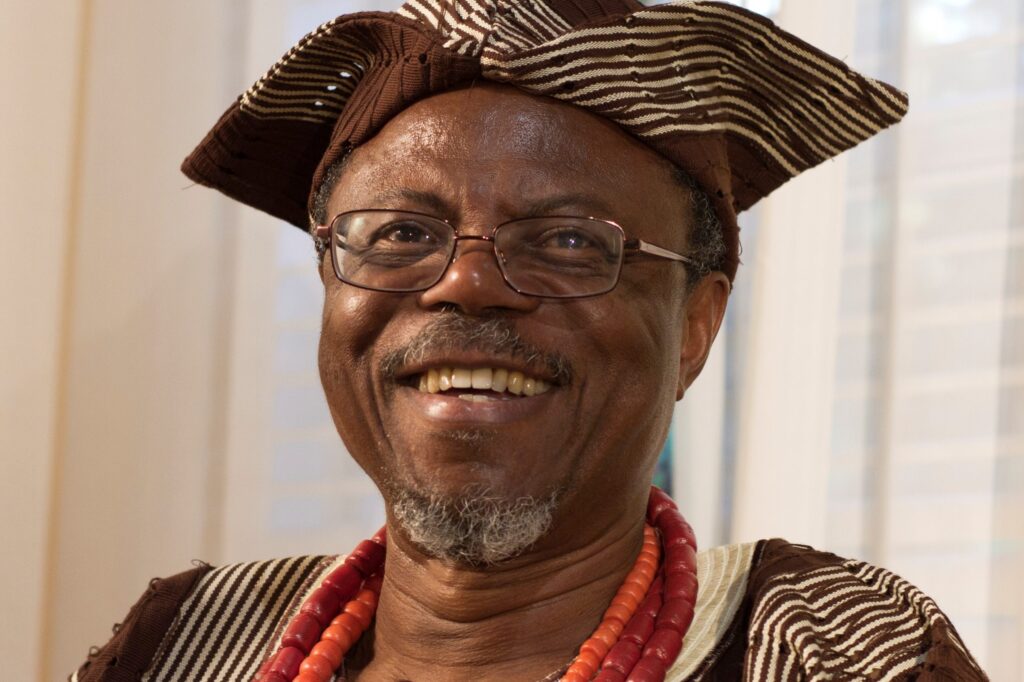
By Toyin Falola
The creation of the Adeleke University Toyin Falola Annual Lecture (AUToFAL) means more than the name of a scholarly project. It marks the beginning of a major intellectual idea for the institution and the country. Universities are formed not just by debates in classrooms, experiments in laboratories, research in libraries, and examinations, but by debates that occur through all of that, and by questions that remain unanswered and are left to be answered by future generations. By naming an annual lecture in my honor, Adeleke University is creating a space of such intellectual debates, where scholarship can address the most pressing issues that face us at present, where scholarship can challenge received knowledge, and where young scholars can confront the opportunity of a life of the mind.
It is thus that I take receipt of the creation of this lecture with immense gratitude and modesty. There is something extremely humbling about realizing that your name will forever be linked to the tradition of a university lecture dedicated to the production and dissemination of knowledge. A lecture, when conceived properly, is not a monument to a person. Instead, it is a dedication to a concept: knowledge is important; intellectual liberty is significant; universities should remain havens of bold inquiry; and scholarship finds its greatest relevance in addressing the conditions of humanity. The decision by Adeleke University to make this commitment through the maiden edition of AUToFAL is, in that sense, larger than the honor itself.
The importance of the event gains even more clarity from the chosen theme for the inauguration: “History, Power and Accumulation: Reimagining Africa in the Global Order.” It is not simply an issue that will be discussed during the academic program. Rather, it addresses Africa’s historical position, its accumulated experience, the role played by the system of power globally, and its ability to imagine another future. The theme forces us to take a step both backwards and forwards. It questions the effect history had on Africa, but also what Africa can do with its own history. It discusses the process of accumulation and distribution of power, but also whether it is possible for Africa to have enough intellectual, economic, political, and cultural capacities to shape the global order itself.
The topic places the lecture not within the narrow boundaries of personal commemoration but within the much larger intellectual conversation about Africa’s place in the world. In that respect, the guest lecture by Professor Adelaja Odukoya of the University of Lagos thus becomes a part of the dialogue not just for an individual researcher and a single institution but also for the whole academic community interested in the subject of history as a source of power and knowledge, accumulation as a process of wealth and power acquisition, and the future of Africa as something that cannot be left to the imagination of other people. Here, my intellectual tradition comes into play as well. All my academic career has been based on the idea of the way Africa was presented, how African knowledge was created and African society perceived its history, and how the continent could transform from being mostly an object to becoming an important part of the processes taking place all around the globe. In other words, the future of Africa in the contemporary world could not be discussed without referring to the questions of historical consciousness and intellectual confidence of the continent and its societies.
The choice of Professor Adelaja Odukoya of the University of Lagos as the guest lecturer for the inaugural edition adds another layer of significance. Theme: “History, Power and Accumulation: Rethinking Africa in the Global World” is not a decorative theme. Rather, it is an appeal to take seriously the history of Africa and the place of Africa in the present-day world, which is characterized by growing geopolitical uncertainties, economic competition, technological changes, resource contestation, alliance shifts, and struggles for centers of power in the global order. Will Africa continue experiencing the global order in the way of being its object only? Or rather, can Africa become an active player in creating the order itself?
My works have constantly undermined frameworks that marginalize Africa in terms of world history. I have portrayed Africa as not only a passive victim but as an active player in world history with intellectual, political, cultural, and global connections of its own. This is clearly indicated by the Palgrave Handbook of Africa and the Changing Global Order, edited alongside Professor Samuel Ojo Oloruntoba, where Africa is considered a proactive actor in the evolving global order. This way of thinking is important because the way in which Africa conceives itself impacts the decisions that it makes. A continent that conceives itself in terms of the categories placed on it will find it hard to conceive of itself as an actor in the shaping of global events. However, a continent that conceives itself in a different way can start to imagine a different relationship with the rest of the world. The issue is not about whether Africa has been part of global history; it has always been part of it. But it is about whether Africa has enough intellectual, political, and economic agency to shape global history in the future.
This is a world where Africa emerges into the world with more self-confidence, strong institutions, and knowledge. The purpose here is not one of isolation but of agency; not one of rejecting globalization but one of equitable participation within it; not a world of romance with regard to its past but one that understands its history. History, on the other hand, defines power. Historical memory helps form political identity, national consciousness, international relations, and social understanding of their position in the world. For one to study the future of Africa without understanding such structures of history would thus be to construct tomorrow without knowing properly the foundations of today. In Decolonizing African Knowledge, I address this issue head-on. The book questions the implications of slavery, colonialism, and neocolonialism on African knowledge and institutions. Its larger intervention is to challenge the assumption that legitimate knowledge about Africa must always pass through inherited Eurocentric frameworks. Also, a recent publication, Decolonization and the Future of African Studies, extends this concern by arguing that indigenous intellectual traditions and knowledge systems remain essential to the study of Africa and that African scholarship must move beyond the limitations imposed by Eurocentric approaches to the continent’s past and present.
This has implications far beyond the humanities. Knowledge itself is one type of power. It includes defining problems, creating categories, doing research, determining what expertise means, and influencing the terms of the global debate. It is impossible for Africa to achieve greater influence in global politics if it continues to be overly dependent on outside organizations for the creation and verification of knowledge about its own society. The future of the continent will require more than just better infrastructure, improved economies, and more effective political institutions. It will also require intellectual institutions that can create theories and policies based on African reality.
The word “accumulation” in the lecture theme is equally important. Africa’s position today is impossible to understand without considering the way in which wealth, resources, labor, and knowledge have been acquired and distributed in the course of history. Colonialism was not only a political form but also an economic form. The extraction of resources and the transformation of African economies have created a legacy that has affected the position of Africa in the global economy. Development in Africa after colonialism has often been faced with arrangements that did not take Africa’s economic independence into account. Discussions about minerals, energy, debt, trade, technology, and global investments thus have their histories. The issue, however, is not just to repeat the history of exploitation. It is more important to know how Africa turns its great resources into power.
In Africa and Globalization: Challenges of Governance and Creativity, co-edited with Kenneth Kalu, the discussion focuses on the promises and challenges of globalization and asks why African states have struggled to diversify their economies and move beyond the export of primary commodities. The work also considers how African states can play more active and profitable roles in the global economy. The future imagined through this intellectual tradition is therefore not a future in which Africa withdraws from the world. This is a world where Africa emerges into the world with more self-confidence, strong institutions and knowledge. The purpose here is not one of isolation but of agency; not one of rejecting globalization but one of equitable participation within it; not a world of romance with regard to its past but one that understands its history.
That is why the inaugural AUToFAL lecture is more than an academic event. It creates an institutional space for precisely the kind of conversation that Africa requires at this historical moment. The world is fast changing. Global power is becoming more dispersed and contested. New technologies are revolutionizing economies and societies. Competition for critical minerals is becoming more intense. New geopolitical alliances are being formed. The legitimacy of existing global institutions is being called into question. The separation between economic power, technological power, military power, and knowledge power is becoming more blurred. Africa can ill-afford to be just a spectator in all these changes. However, for Africa to become a global player, more than mere rhetoric is required. There must be universities that generate new knowledge; there must be governments that translate this knowledge into policies; there must be industries that add value to the continent’s natural resources; and there must be societies that invest in education and freedom of thought. It will require a generation of Africans who know their past and believe in their future. Most importantly, it will require a culture that views intellectual work not as ornamental but essential.
The highest compliment we could pay an intellectual does not lie in praising his output and career; it lies in creating institutions that take the questioning forward. An annual lecture acquires meaning only when it inspires intellectuals to question the knowledge already out there, students to become intellectually courageous, and institutions to understand that the creation of knowledge is indeed an act of public service. Adeleke University’s decision to inaugurate the lecture therefore deserves commendation. It transforms an individual honor into an institutional tradition. Each edition can become an opportunity to bring scholars, students, policymakers, cultural thinkers and members of the wider public into conversations about Africa’s historical experiences and future possibilities. The maiden lecture, particularly with its focus on history, power, accumulation and the global order, sets an ambitious tone.
There is also something deeply appropriate about beginning this intellectual tradition with a conversation about Africa’s place in a disorderly world. Disorder should not automatically be interpreted as African marginality. But times of global uncertainty also open up new spaces for new players and new ideas. What matters is that Africa should have the intellectual and institutional capacity to grasp the moment. The future of Africa cannot be created by either forgetting its past or being held captive to the past. The need is to move from history to imagination. Africa must understand what its history is all about, know the structure that has made its present, and have the confidence to dream beyond the hierarchy of the past.