By Toyin Falola
The decision by the University of Jos to invite Professor Attahiru Muhammadu Jega as the keynote speaker for the 2026 edition of the Toyin Falola Annual International Conference (TOFAC) in Jos was an intellectually informed one. The decision was timely and well aligned with the conference’s vision in addressing critical matters both through actions and meaningful discussions. Having Professor Jega to keynote the conference was more meaningful in practice than a mere selection of a distinguished public servant or celebrated academic. His invitation centred on a convergence between his scholarly and public career in relation to the enduring questions of identity in confronting Africa and the world at large.
As is the usual tradition, TOFAC 2026 had a most befitting theme. This year’s discussion was carefully chosen to discuss “Identities: Concepts, Theories–Change and Continuity.” The theme invited participants to a discourse central to human existence. For a very long time, identities have shaped how individuals and communities understand themselves. It offers perspectives into how a society and its people relate to others and how they are placed within history. Identities have been understood as a determining factor that influences citizenship, culture, politics, social status, amongst other aspects of the world. As profound as they are, identities are neither fixed nor entirely flexible. They are adaptive and have evolved under extreme conditions across generations. Factors that often affect social identities include social pressures for change, politics, human migration, technology, and globalization.
Identity in Africa has long been more than an abstract intellectual concern. It is one of the defining questions of Africa’s historical experience. African societies for centuries have persevered and evolved through encounters with external elements. The influx of empires, religion, colonialism, amongst others. As a result, the continent has become characterized by its shift to accommodate practices previously unknown to it, while holding onto key aspects of its own, like language, communal memory, and rituals, amongst others. Colonial rule, for instance, altered existing political and social structures within African communities. Colonialists, through various means, succeeded in reshaping existing identities to create new ideals of belongingness and exclusion. Those who adapted and took to the new ways became part of the new order, while others who preferred the existing structures suffered exclusion. These distinctions continued into the postcolonial era, where these tensions continue to appear and influence the direction of social conversation on the essence of the African state. Many years after the exit of the colonialists, these questions remain as relevant as they were at independence.
Indeed, a significant number of the contemporary challenges before Africa are largely attributed to the democratic system of governance, clamour for social cohesion, conflict management and nation-building. These concepts are crucial to any discussion on identity, which is exactly why Professor Attahiru Jega was an appropriate choice as the keynote speaker. He has lived around these intersections long enough to understand how fundamental they are to social development.
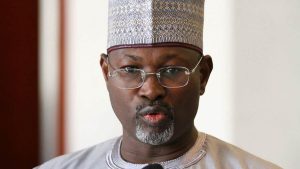
Jega’s academic distinction on the subject and his illustrious career distinguish him. As an expert in political science, Jega is a trailblazing cerebral on democratic development, socio-political and institutional reforms. He has significantly and notably contributed to thematic discussions on diversity, political structures, and historical experiences that shape governance outcomes and democratic practice.
Many years before his pivot into public administration, Jega was well established and known within intellectual circles as someone with a profound concern that democracy could be consolidated in Africa. He has made credible contributions in exploring the relationship between the masses and the institutions that serve them; he has contributed to studies on the challenges of political representation and the forces acting on collectivism and social transformation. In many respects, his previous works and inquiries are genuinely inseparable in grounded discussions of identity and belonging.
Undisputedly, Jega is not just a celebrated academic; he is a remarkable personality with an enviable record, typical of a scholar. Unlike others whose relevance begins and ends in the classroom and journals, Jega is well known for a theory–practice approach. As the Academic Staff Union of Universities (ASUU) president in the 1900s, he was at the forefront, leading campaigns and advocacy for academic freedom, accountability, and educational reform. His time in office is remarkable for persistent advocacy on the impacts of higher education in national development. He is a loud voice in addressing governance fallouts, education reforms, and better policies for national development.
His excellent performance as the Academic Union president perhaps led the way for his subsequent appointment as Chairman of the Independent National Electoral Commission (INEC). The new role ultimately placed him at the centre of Nigeria’s democratic experience. There, he experienced firsthand some of the most difficult questions in a diverse society. Nigeria’s diversity makes elections a complex matter. Nigerian elections are rarely contests of policy alone. They are shaped more in truth by other factors beyond policymaking. For every election, factors like regional loyalties, ethnicities, and religious identities have played key roles in determining victory at the polls. Administering elections in such a fragile environment gives a profound understanding of the social realities at work in each region.
Jega’s leadership as electoral chairman portrayed how crucial institutions and well-positioned individuals could be instrumental in managing diversity to sustain democratic legitimacy. The electoral reforms he promoted during his tenure restored the eroding trust the public had in its institutions. The public was excited enough to participate in the democratic process en masse. The electoral body’s role in ensuring a better electoral process and similar events surrounding the eventual power transition demonstrated the electoral commission’s role in bridging the political tension in an already tense climax. The ideals and belief systems that guided the electoral chairman in administering an historic election encourage the transition of all borders into qualities that resonate strongly with the central theme of TOFAC 2026.
A keynote speaker is expected to share a wealth of experience. Without doubt, Prof Jega is well-positioned to take the attendees through a rare perspective on identity as both a concept and a reality. For Jega, identity is beyond theories. It is something deeper. It is that which shapes public life, influences political outcomes, and affects institutional stability. Without any exaggeration, it is fair to say that only a few individuals have observed more closely how identities further a sense of solidarity, public participation in politics, and cultural resilience, while at the same time acting as tools for exclusion, division, and conflict.
The selection of Jega was not a surprise for previous participants and attendees. This is because his selection as a speaker correlates with the broader intellectual tradition associated with me as the convener and the conference that bears his name. For decades, the convener has dutifully called for the reshaping of the contexts around African scholarship. He continually nudged the intellectual community on the need to challenge any simplistic understandings of Africa. This explains why Professor Jega’s keynote address this year is more than a ceremonial lecture. His presence and the theme for discussion fit into the larger conversation on how social identities could be understood
Significantly, Jos further enriches this conversation. a city agreed to be the crossroads of multiple cultural, religious, and ethnic traditions. The city of Jos portrays various complexities associated with identity in contemporary Nigeria. Its history richly reflects the possibilities and challenges of pluralism. As a site where questions of belonging, cohesion, and communal memory have often been invoked, it was the most appropriate setting for TOFAC.
As participants gathered for TOFAC 2026, they confronted questions that extend far beyond academic debate. Questions that sought clarity on the roles of technology, migration, global connectivity, and international policies on identities. Participants would meet arguments that prove why communities still draw meaning from history, culture, faith, language, and shared memory, amongst other salient tasks at TOFAC.
These questions sit at the heart of the TOFAC theme and are what Professor Attahiru Jega was called upon to address. With a remarkable track record, Professor Jega is uniquely positioned to address these questions. He is no doubt a representation of ideas and action. His presence at TOFAC 2026, therefore, became a thoughtful addition to an intellectual engagement.
In bringing Jega to Jos, TOFAC did more than welcome a keynote speaker. It invited participants into a deeper reflection on one of the most consequential issues of our time: how identities are formed, sustained, argued, and transformed in the continuing pursuit of democratic and human flourishing.