By Toyin Falola
When Poverty Begins to Know Your Name
Money no longer passes by my street.
Maybe it heard that sorrow lives here.
Maybe it saw my roof, my cracked shoes,
the tired face behind the window,
and decided
that there was nothing left to harvest.
Owó!
You’ve become a stranger
who remembers everybody except me.
You appear at weddings.
You dance at naming ceremonies.
You spray yourself on musicians.
You sleep in the pockets
of men whose laughter
fills expensive rooms.
But here—
Here, even silence is hungry.
My pocket is no longer empty.
It has become a grave.
I reach my hand inside it and feel
the bones of yesterday.
Mo gbe!
The landlord is knocking.
Kọ̀n. Kọ̀n. Kọ̀n.
Each knock pilfers a little bit of dignity away.
I sit perfectly still
and teach my breath
how not to betray me.
The children understand the ritual.
Do not cough.
Do not shift the chair.
Do not drop the spoon.
Let the house pretend
That nobody lives here.
What kind of poverty
raises a family
to forget how to exist?
What kind of God trains ants
to swallow their young?
The electricity has left us.
Not for a night.
Not for two.
Darkness woke up one day
and decided to move in.
The refrigerator breathes
the odour of expired things.
The fan spins above our heads
like an ineffective prayer.
Mosquitoes swarm
because even they
have more abundance
than we can claim.
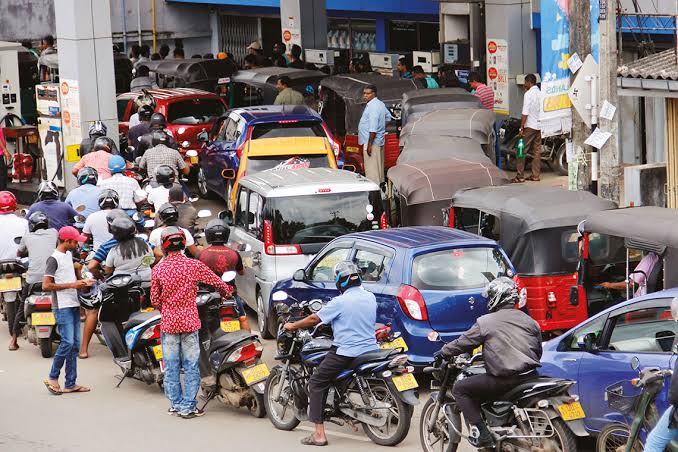
The market reminds me
of my failings.
Rice struts now
with the legs of a king.
Beans have raised their pomp against
the poor.
Garri!
Once the faithful friend
of lean days—
now troops for wealth.
Pepper burns itself
to feel the pain of entering the mouth.
Yam sneers at me
like a chief who suspects
his former kinsman.
I ask the woman:
“How much?”
She tells me.
I laugh.
I don’t find it funny.
But grief laughs before it weeps,
I’ve learned to question its motives.
I remove one item from the basket.
Then another.
Then another.
Until the bag clings to emptiness.
Until my pride withers to nothing.
Back home,
They ask: “What did you buy?”
And I show them.
At the time of unveiling,
they gasp: “Is that all?”
And I say:
“Yes.”
I am broken at that one word.
Yes. That is all.
My salary staggers home
half-dead.
If luck flies ahead
to signal our meeting,
School fees greet it.
Rent greets it.
Transport greets it.
Electricity bills greet it.
Family members greet it.
Friends greet it.
Eventually, debt greets it.
Every mouth is waiting.
Except the mouth of hope.
Hope is starting late these days.
Money that enters from one door
Should never exit through the back.
But these days,
when money enters through one door,
ten other doors open
to greet it out the other side.
Sometimes,
before I can even whisper,
“Thank God,”
It is gone.
I stare at the screen on my phone.
Numbers so thin they apologize for being numbers.
Then my mother calls. “My child,” she says,
“Things are tough here.”
I hang up before she finishes.
There are sentences that can murder the spirit
without shedding blood.
Ask your mother how her heart died
when she realized she couldn’t afford your fees.
Ask any woman how she survived that afternoon.
My phone vibrates again.
Creditor.
I let it vibrate.
Silence is a better answer.
Again. Again. Again.
Each time the phone vibrates,
Someone else beats me publicly.
Later,
the person sends a message:
“Can we see you today?”
Don’t mistake me—I love this person.
But need has a way of heating words
until they burn both parties involved.
Such a small sentence.
Such a razor blade of words.
I type back:
“I’ll be there soon.”
Soon.
That lie alone has defeated me.
I’ve told my loved ones “Soon” so many times,
Soon has grown suspicious of me.
My phone rings.
I stare at the name.
I know the story before I pick up.
Debt.
You and I both know
Debt knows where I sleep.
Gbèsè!
Debt comes at night.
It comes when you are helpless.
Debt has no mercy.
It enters the bedroom.
It sits on your pillow.
It whispers to your wife
until sleep leaves your eyes.
One hundred thousand.
Two hundred thousand.
Interest.
Penalty.
Late fees.
Overdraft.
It screams these numbers as I am trying to pray.
Sometimes
I wake at 2 a.m.
with my heart beating
as though someone
has broken into the house.
Nobody has.
Only tomorrow.
Tomorrow has entered
without permission.
I calculate.
I subtract.
I divide.
I rearrange disaster.
Perhaps if I do not eat lunch.
Perhaps if I postpone medicine.
Perhaps if I walk instead of taking transport.
Perhaps if the child can wait one more week.
Perhaps if the landlord has mercy.
Perhaps.
Perhaps.
Perhaps.
Poverty is a religion of perhaps.
It makes you worship uncertainty.
It makes you bow before small miracles.
A forgotten note inside an old trouser pocket.
A friend who pays for lunch.
A meeting where food is served.
A relative who says,
“Don’t worry about paying me back.”
These things become testimonies.
There are days when hunger sits
at the table with us.
We know hunger.
We know its manners.
At first, it complains.
Then it becomes angry.
Then,
after many hours, it grows strangely quiet.
That silence is frightening.
The children say:
“I am not hungry.”
And I know they are lying to protect me.
There is no wound deeper.
Than a child learning to hide hunger
because the parent has no answer.
Ọmọ tí ebi ń pa
kì í mọ ìtìjú.
The hungry child
should not know shame.
Yet poverty teaches shame.
Before it teaches arithmetic.
It teaches the child.
Why other children have new shoes.
Why others bring lunch.
Why some houses have light all night.
Why school trips must be avoided.
Why birthdays become ordinary days.
Why Christmas must sometimes arrive
without chicken.
Ah, poverty.
You are cruel.
You do not merely empty pockets.
You enter marriages.
You sit between husband and wife.
You turn small disagreements into wars.
You turn tenderness into irritation.
You turn affection into accounting.
“How much did you spend?”
“Why did you buy this?”
“Could we not have waited?”
Every question carries a hidden accusation:
You are the reason we are suffering.
Friends stop calling.
Or perhaps
I stop answering.
Invitations become financial threats.
Weddings require clothes.
Funerals require contributions.
Birthdays require gifts.
Visits require transport.
Even friendship has begun to cost money.
So, I withdraw.
People say:
“You have changed.”
Yes.
I have changed.
Financial suffering is a slow sculptor.
It removes laughter first.
Then confidence.
Then sleep.
Then appetite.
Then the desire to explain yourself.
Eventually, you become quiet.
Very quiet.
You learn to smile without happiness.
You learn to say, “I am fine,”
While something inside you
is kneeling in ashes.
My people say:
Ìṣòro kì í parí ayé.
Trouble does not end the world.
But some troubles make the world
feel already ended.
Some mornings,
I do not fear death.
I fear bills.
I fear the end of the month.
I fear sickness.
I fear the sound of a car developing a fault.
I fear a child’s sentence:
“Daddy, they said we should bring money.”
I fear emergencies.
Because emergencies
assume that somewhere
inside your life
there is money waiting.
There is none.
Only prayer.
Only calculation.
Only shame.
I kneel before Olódùmarè.
At first,
I pray beautifully.
Then the words disappear.
I sit there.
What prayer remains
when the mouth is tired of asking?
Olódùmarè, ṣé o rí mi?
God, do you see me?
Do you see this humiliation?
Do you see the man hiding from creditors?
Do you see the woman
removing meat from her own plate
so the children can eat?
Do you see the old father?
Pretending he does not need medicine?
Do you see the graduate?
With certificates on the wall
and nothing in the account?
Do you see dignitybeing sold
Piece by piece?
The elders say:
Sùúrù ni baba ìwà.
Patience is the father of character.
But how long
Must patience eat suffering?
How many nights
must a person sleep beside fear?
before patience itself begins to bleed?
There are nights when I envy the dead.
Not because I want their grave.
But because no creditor calls them.
No rent expires.
No school demands payment.
No market raises prices. against them.
Their accounts are closed.
Their obligations are finished.
And then I fear my own thought.
I touch my chest.
I whisper:
Kí Olódùmarè má jẹ́.
God forbid.
Because somewhere beneath the ruins,
life still burns.
Weakly.
Stubbornly.
Like the last coal inside an abandoned hearth.
I have not won.
I am not pretending.
There are no triumphant drums.
at the end of this poem.
No sudden miracle.
No bag of money falling from heaven.
Tomorrow, the debt may still be there.
The landlord may knock again.
The market may become worse.
The account may remain empty.
But I will rise.
Not magnificently.
Not heroically.
I will rise
the way wounded people rise—
slowly,
holding the wall.
I will wash my face.
I will wear the shirt.
that still looks respectable.
I will greet people.
Ẹ káàárọ̀.
Good morning.
They will not know
that I have already fought three battles
before leaving the house.
They will not know
that poverty
slept beside me.
They will not know
that I counted coins
before sunrise.
They will not know
that I nearly cried
while tying my shoes.
This is how suffering survives:
Quietly.
This is how dignity survives too.
Quietly.
And if money
has truly forgotten
the road to my house,
Then let my Orí
remember the road
to endurance.
Let my ancestors
stand behind me.
Let them say:
Má ṣubú patapata.
Do not fall completely.
Because a person can lose money.
Lose sleep.
Lose comfort.
Lose friends.
Lose status.
Lose almost everything—
and still guard
one final possession:
The stubborn refusal
to let suffering become his name.
For the past twelve months, Musa Adeleke had been a scarce man of sorts. It was difficult to find him after work hours. His colleagues had given up on inviting him to after-work hangouts, particularly on Fridays before the weekends. Before this new routine, Musa had never missed a football hangout with friends after work. His presence had always made a place an interesting one. Eventually, colleagues at work had to stop asking.
No one knew what was up; however, it was right to leave him to his decisions. Afterall he was a grown-up. Musa did not just stop attending the Friday hangouts; he also stopped honoring invitations of all kinds. Whenever an invitation was extended, he always had something to say. Sometimes it was a family commitment. Other times it was an urgent assignment at work. Whenever excuses seemed flimsy, he asked others to go ahead, and he would join them shortly. He never did. With time, friends and colleagues accepted that he had become distant. Some concluded that success had gotten to him, while others believed marriage had changed him. After all, what else could have happened?
Musa’s estranged behavior did not end at work. At home, the children had become used to his absence. His youngest daughter had learnt to sleep without being tucked into bed by daddy. His son, on the other hand, had become weary of waiting to get the day’s newspaper from him. Musa had always encouraged the young boy to read and solve the puzzles in the papers. The two had a tradition where Musa returned home with the day’s newspaper. Whenever curiosity made them ask why Daddy returned home so late, his wife would smile and blame the Lagos traffic. It was an answer that laid other questions to rest.
Life had not always been like this for the Adelekes. Eight years had passed since Musa started his administrative job at a logistics company. It was a promising job with fair compensation. The new role had brought a form of relief to the family. Finally, they were tilting towards stability. His salary was modest but sufficient for rent, school fees, and the ordinary expenses of raising a young family. They even managed to save a little each month, and on some weekends, could afford to eat out. Those memories now seem distant.
The situation did not change overnight. It was gradual. At first, living conditions rose beyond the family’s economic might. And then came the diagnosis. His widowed mother had developed a critical medical condition that required monthly medication. It was manageable at first until his younger sister gained admission into the university. Musa was the first child and only male son of four, and everyone quietly assumed he would help, which was exactly what he did. The burden was huge, but he never complained; he adjusted. What began as a manageable life slowly became unbearable as the family income could not cater for their needs.
A wise man must know when to change strategy, Musa thought, as he reflected on the past months. In the end, he concluded he needed an alternative stream of income. He tried every possible means to get remote roles or better offers; none came through. In the end, he resolved to make do with whatever comes by. That was how his night shift bakery began.
Every weekday, Musa leaves for home at 6 pm, just like his colleagues. However, instead of heading home straight, he takes a bus in the opposite direction to the small bakery on the outskirts of the city. Every evening, he resumes work as a production assistant and works until shortly before midnight. Sometimes, he closes later than that. At the end of every shift, he heads home straight to catch a few hours of sleep before preparing for another day at the office. Whenever the bakery assigns him to a morning shift, he swaps with another worker or pays the supervisor in charge to rearrange the roster. It was a necessary decision to keep up, even though it reduced the little extra money he earned. However, he became lucky when the manager took pity on him and placed him on permanent night shift as long as he was efficient. This allowed him to keep two jobs and earn a little extra.
His second job remained a secret. He was careful not to become the source of any office gossip. His colleagues would probably mock and judge him if they knew how he spent his nights. He was not ashamed of the honest work and also did not want to be gossiped about. So, he maintained his identities carefully and kept to himself.
Only his wife observed the change. She noticed he looked permanently tired, spoke less, and complained of backaches. She also observed he would wash himself every Saturday morning, fold his clothes, and refuse help whenever she offered to. His habits were unusual, but she knew better than to pester him for answers. Musa could be very private and reserved sometimes. She assumed he would come around when he was ready. It passively crossed her mind that her husband’s new behavior could be a result of dwindling finances, but she passed the idea off. After all, she knew Musa would never blame himself for something beyond his control, and he was making efforts to get better roles. On one occasion, she advised him to consider staying close to the office if traffic was that bad. He could sleep close to his workplace and return home every weekend. Musa only thanked her.
One Saturday, Musa returned home after a long night shift at the bakery. He was so tired and fell asleep immediately he got home. He forgot to put the bag away. While tidying the room, his wife picked it up for safekeeping. The couple had mutual respect. She would never have checked if she had not been so curious to understand why he kept the bag close. She opened it and was surprised to find a factory-style uniform and an identification card bearing her husband’s name and a bakery’s. There were also two loaves of bread he must have intended to bring home for breakfast. The brand was a familiar one. He always returned home on weekends with two big loaves. She stood there for a long moment before placing the bag in its right position.
She never discussed it nor gave any clue that she knew. Instead, she became more prudent and assisted the family more with proceeds from her small business. She tried her best to manage the little resources and find more creative ways to ensure foodstuff lasts. She also stopped asking for little things she would once have mentioned without thinking. She became more intentional and sought alternatives to her small-scale business. She remembered how Musa had always given his all to provide for his family.
One afternoon, she was on the phone with her mother when Musa walked in. He could hear the exchange from both ends. His mother-in-law had asked why Musa no longer sent money as before. She compared him with another son-in-law who had recently helped his wife’s family to start a business. Musa listened as his wife defended him. She would not take such from her mother. She spoke gently but firmly. “Mummy, please don’t judge my husband. It is a difficult time, and he is trying to make things better.”
Her mother got the message and switched topics. They discussed briefly before the call. Musa quietly moved away as he heard her walk towards the kitchen. He returned to the living room where he remained for several minutes. For months, he had measured himself by unpaid bills, postponed responsibilities, and the things he could no longer afford. He had begun to believe that he was failing his growing family. He had tried to cover his shame by making up for it by keeping his distance. Yet, the person who lived closest to his struggles had seen something different. She had not measured him by the size of his income but by the depth of his sacrifice. For the first time in a while, he realized he had been fighting a communal battle alone.
Just like Musa, financial inadequacy has shrunk many people’s world. It keeps them away from memorable moments with loved ones because they believe it is safer, as they cannot afford any financial commitment required. They say no to outings, reunions, and family gatherings they would have loved to honor. Their hearts beat faster when friends and relatives call. Without picking up, they began to think of excuses for missed calls. Low income quietly steals confidence and replaces it with guilt until a hardworking person begins to feel like a disappointment.
It is a common phenomenon in our world today. There is the colleague who smiles at work while calculating which bill can wait another week. Some friends hustle two or more jobs to meet their basic needs. Others have become strangers because they are broke. Their inability to meet basic demands weighs them down by the day.
They do not ask to be seen, pitied, nor do they expect life to become easy overnight. However, genuine understanding and kind gestures are what keep them going. The knowledge that there is someone somewhere rooting for them is enough reason to persevere.
Access to finances cannot be ascertained at all times. Hence, the wisdom in savings. A scarce commodity like money should outrightly not be used to measure a person’s worth. Behind many disappointments are tales of honest sacrifices and silent battles unknown to the majority. Before you conclude that someone has become distant, proud, or uncaring, remember that life has a way of placing burdens on people that are far heavier than they appear. One such burden is battling financial inadequacy.