The National Boundary Commission (NBC) has intensified efforts to resolve the decades-long Ekiti–Kwara boundary dispute to curb recurring communal clashes and restore lasting peace.
The decision followed the Joint Meeting of Officials on the Ekiti–Kwara interstate boundary held in Ado-Ekiti.
The resolutions were contained in a statement issued on Friday in Abuja by the commission’s Head of Information, Press and Public Relations, Mrs Chinwe Udouwem.
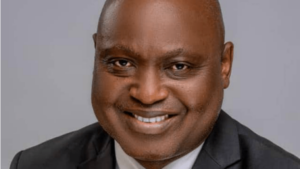
Speaking at the meeting, the Director-General of NBC, Mr Adamu Adaji, described it as a major milestone in resolving outstanding issues along the shared boundary.
Adaji said the commission had intensified efforts to achieve the final definition of the 70-kilometre interstate boundary.
He explained that the current Ekiti–Kwara boundary was inherited from the former Ondo–Kwara interstate boundary.
According to him, the boundary derives its legal basis from Legal Notice No. 126 of 1954, which defined part of the boundary between the former Northern and Southern Nigeria.
Adaji said the commission intervened because of recurring communal clashes in affected border communities.
He said the clashes had resulted in loss of lives, destruction of property, displacement of residents and prolonged tension.
“The National Boundary Commission remains steadfast in discharging its constitutional responsibility to peacefully define interstate boundaries and promote harmonious relations among neighbouring communities.
“Our objective extends beyond drawing boundary lines; it is about consolidating national unity, enhancing security and creating an enabling environment for sustainable socio-economic development,” he said.
Adaji said significant progress had been made, but two critical sectors remained unresolved.
He identified them as the Eda-Oniyo (Ekiti)–Obbo/Aiyegunle (Kwara) axis and the Erinmope (Ekiti)–Imoji, Ilofa and Odo-Owa (Kwara) corridor.
He recalled that since 2002, the commission had convened several Joint Meetings of Officials and constituted Joint Field Teams.
He said the commission had also conducted extensive field tracing using Legal Notice No. 126 of 1954, historical records, authenticated maps and relevant court judgments.
Adaji said the latest technical meeting, held in Abuja in August 2024, resolved that digitised boundary maps would be forwarded to both states.
He said the maps were for review, consultation and harmonisation before the final demarcation exercise.
He, however, expressed concern that the commission had yet to receive harmonised reports from both states.
According to him, the delay has stalled the commencement of the final phase of the boundary definition process.
“The Commission has fulfilled its obligations by producing and forwarding the digitised maps in accordance with previous resolutions.
“We are awaiting the harmonised positions of both states to enable us to proceed with the final definition and demarcation of the interstate boundary,” he said.
Adaji said the meeting was convened to review outstanding issues, build consensus and agree on practical steps to conclude the exercise.
He urged the Ekiti and Kwara governments to continue supporting their State Boundary Committees with adequate logistics and resources.
He also appealed to affected communities to remain peaceful and avoid actions capable of undermining the ongoing process.
Adaji said the successful conclusion of the exercise would eliminate recurring disputes, strengthen security and improve governance.
He added that it would facilitate infrastructure development, stimulate economic activities and promote peaceful coexistence along the interstate boundary.
The meeting was attended by representatives of the deputy governors of Ekiti and Kwara states.
The Ekiti Deputy Governor, Chief Monisade Afuye, was represented by Mr Adeleke Adefolaju, Permanent Secretary, Office of the Deputy Governor.
The Kwara Deputy Governor, Mr Kayode Alabi, was represented by Mr Ayontola Malomo.
The representatives reaffirmed their governments’ commitment to a peaceful, lawful and mutually acceptable resolution of the remaining boundary issues.
They commended the commission for sustaining dialogue and providing an effective framework for resolving the dispute.
They also pledged continued collaboration with the commission and appealed to affected communities to support the ongoing boundary definition exercise.
(NAN)