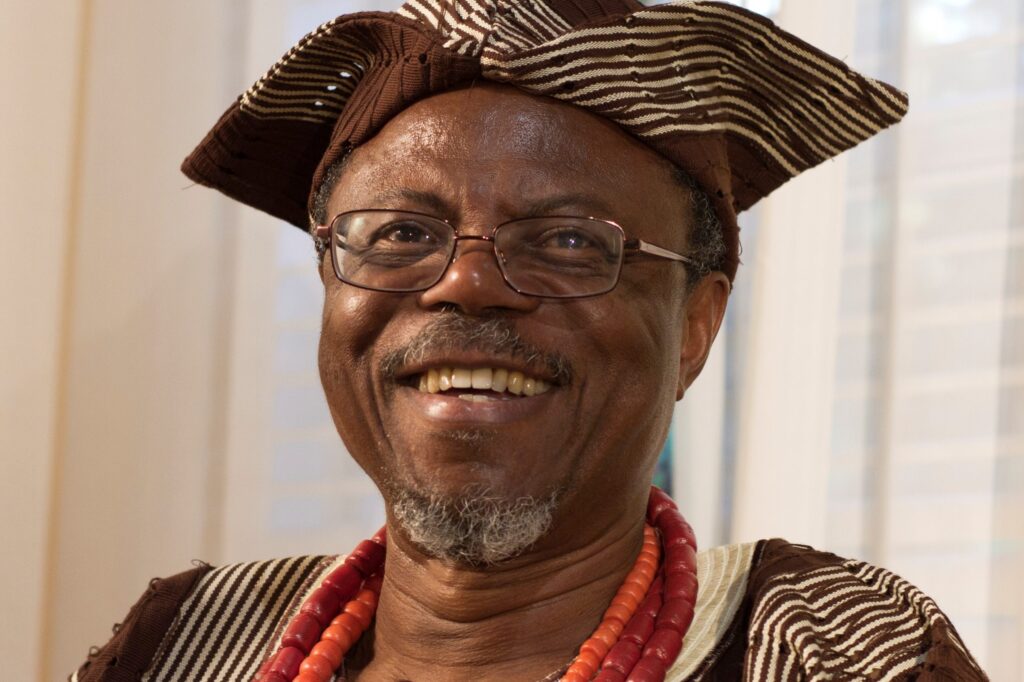
By Toyin Falola
The Road Has Eaten Another Name
At dawn, the road opened its black mouth
and swallowed a family.
It did not chew.
It did not ask whose children they were,
what prayers their mother had tied
around their travelling hearts,
or whether the father had promised
to return before the evening meal.
The road swallowed—
metal, bone, breath,
a flask of water,
three certificates in a brown envelope,
and the small red shoes
of a girl who had just learned
to write her name.
They say,
when the drumbeat changes,
the dancer must change his steps.
But what step can outrun
a drunken driver?
What dance can escape
a lorry without brakes,
a crater disguised as a highway,
a government that remembers the dead
only when cameras arrive?
The bus left Ibadan before sunrise.
Someone prayed in the name of Jesus.
Someone whispered Bismillah.
An old woman touched the earth
and called upon the ancestors.
Someone joked about the price of Garri.
Someone promised to telephone
after reaching home.
None of them arrived.
By noon, their phones were ringing
inside the wreckage.
“Mama.”
“My Love.”
“Chairman.”
“Home.”
“Unknown Number.”
The dead could not answer.
The road had answered for them
with broken glass,
with petrol and blood,
with smoke rising like a dark sacrifice
to gods who had asked for nothing.
In the village,
a pot slipped from a widow’s hands.
She had not yet heard the news,
but grief had already entered her body.
For, as the elders say,
when the great tree falls,
the birds lose their resting place.
Her husband was the tree.
Her children were the birds.
That afternoon,
the sky became homeless.
At the hospital,
the corridor learned new languages of sorrow:
the scream of a mother
recognizing her son by his belt;
the silence of a man
collecting his wife’s earrings;
the trembling of a child asking
why Baba was sleeping
beneath a white cloth.
No elder could answer.
There are questions
even proverbs cannot carry.
They say,
however long the night,
the morning will come.
But some mornings arrive
without mercy.
Some mornings bring
a coffin too small for its grave.
Some mornings bring school uniforms
that will never again gather dust.
Some mornings bring wedding photographs
to a house where the bride
has become memory.
At the burial,
the earth received them one by one.
A pastor spoke of resurrection.
An imam spoke of paradise.
The elders poured libation
and begged the ancestors
to welcome those who had come too soon.
But the mother heard only soil
striking the coffin:
Thud.
Her firstborn.
Thud.
Her daughter.
Thud.
The last dream of her old age.
She tore her wrapper.
She called the child’s praise-name.
She reminded death
that there were wicked men everywhere—
thieves, tyrants, murderers—
yet death had passed them by
and entered the house of the innocent.
Death gave no reply.
On African roads,
the dead travel faster than the living.
They gather at dangerous bends,
beside faded warning signs,
inside burnt-out buses
left rusting in elephant grass.
Their shadows wait beneath baobabs.
Their voices inhabit potholes.
Their unfinished journeys
wander from town to town
looking for destinations
that no longer exist.
The mechanic blames the driver.
The driver blames the road.
The minister blames destiny.
Destiny stands alone in the rain,
falsely accused.
Because this was not destiny.
This was neglect wearing a uniform.
This was corruption pouring tar
as thin as a politician’s promise.
This was greed loading forty bodies
into a vehicle built for twenty.
This was poverty forcing the exhausted
to drive through the night.
This was a nation digging graves
and calling them highways.
The elders warn:
the ruin of a nation begins
in the homes of its people.
But what happens
when ruin sits in high office,
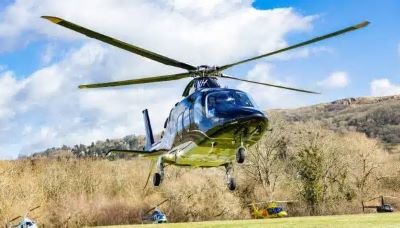
travels with armed escorts,
and flies over the roads
where ordinary citizens die?
Another accident occurs.
Another radio and television announcement.
Another number:
Four dead.
Eleven dead.
Twenty-three dead.
Numbers are clean.
Numbers do not show
the severed hand still wearing
a wedding ring.
Numbers do not reveal
the lunch packed by a wife
whose husband will never eat it.
Numbers do not tell us
that one passenger carried medicine
for a sick mother,
or that another had finally secured
a university admission,
or that the baby in the wreckage
had not yet been named.
The road knew their names.
The road keeps them
beneath its tongue.
At night, the bereaved lie awake
and reconstruct the final moment:
Did he cry out?
Did she feel pain?
Did they hold each other?
Did my child call for me?
These questions become mosquitoes.
They whine inside the skull.
They drink sleep.
They leave fever in the soul.
An Akan saying tells us,
the family is like a forest:
from outside it appears dense;
from within, each tree stands alone.
Grief enters the forest
and separates every tree.
The father mourns without speaking.
The mother speaks to an empty room.
The brother wears the dead man’s shirt.
The sister preserves a final voice note.
but cannot bear to play it.
Each stands alone
beneath a different rain.
The compound grows quiet.
No footsteps return at dusk.
No quarrel rises over food.
No laughter breaks the evening open.
Only framed photographs
watch the living grow older.
Years pass,
but sorrow does not pass.
It merely learns
to sit politely among visitors.
It attends weddings.
It enters naming ceremonies.
It follows the family to church,
to mosque,
to the marketplace.
Then, without warning,
a horn sounds in the distance,
and the wound opens again.
They say,
until the lion learns to write,
the story of the hunt
will glorify the hunter.
But who will write
the story of those hunted by the road?
Who will record
the final thoughts of the passengers
when the headlights came toward them
like two terrible suns?
Who will speak for the dead
when officials call their deaths
“an unfortunate incident,”
repair one kilometer for inspection,
then abandon the highway
until the next harvest of bodies?
Listen.
The ancestors are not silent.
They are asking why
we bury the young before the old.
They are asking why
a journey of two hours
requires farewell prayers
as though one were crossing
the border of the world.
They are asking why
our roads demand blood
before governments remember
that citizens are human.
No one answers.
The rain falls
and washes the blood away.
Traders return to the roadside.
Drivers press their horns.
Passengers squeeze into another bus.
A mother says, “Call me when you arrive.”
The engine coughs.
The road opens its mouth.
And somewhere,
beneath the indifferent sun,
another family begins waiting
for footsteps
that will never
come home.
The journey that never ends! The road is both vegetarian and carnivorous. It drinks rainwater and human blood. Let me use a real-life story to talk about the tragedy. For about four months, Kunle had only one routine. Every morning was a repetition of the previous. The thirty-minute journey to the hospital he had frequently visited for weeks was just another daily ritual. From the gates down to the ward, Kunle could walk around blindfolded. He had been accustomed to the environment. In just three weeks, Kunle had begun to recognize the nurses without looking at their name tags. He knows who should be at what station and who’s on and off duty that day.
As tradition, the elderly cleaner who works the ward entrance and corridor every morning greets him with the same prayer: “Your son will be well.” The doctor does not seem bothered by his presence anymore. After all, they know him and understand his presence in the hospital every day. In less than a month, Kunle had become an unofficial member of the hospital. Even the woman at the canteen no longer asked what he wanted for breakfast. She already knew: a loaf of bread, a plate of beans and bottled water.
Three months in a hospital can make strangers become part of one’s life. In Kunle’s case, three months had made Ward 9 a second address for him. He leaves for the hospital every day before sunrise to the junction where he waits for the first bus to the hospital. Every day, he responded to greetings and prayers of familiar faces in the hospital absentmindedly, as he was always eager to leave the reception and go straight into Ward 9. His son was always the first face he looked for. Some mornings, the boy would be asleep, and on others, he would be awake staring at his usual spot on the ceiling. Kunle looked as the boy stared at the ceiling. He wondered what he was thinking about. For so long, he wanted nothing more than a discussion with his son. But today was one of those days he refused to speak, so he thought. As Kunle took the chair beside the bed, the boy once again grabbed his father’s wrist and asked quietly, “Daddy…When is mummy coming here?” He could not respond. The boy did not ask further. It was as if they both understood silence was best in that moment. Kunle was lost in his own thoughts. He did not realize when the boy drifted back to sleep.
As he watched over his sleeping son, Kunle allowed his mind to drift. He looked outside the door. His gaze rested on the inscription on the opposite door. The plaque read “Ward 7”. It stood directly opposite Ward 9. Kunle could not look in its direction for long. That was where his wife had spent her last moments.
Ironically, the accident that landed them in the hospital lasted for seconds. They were struck by a trailer while returning home to Lagos from Ibadan, after attending a friend’s wedding. It was a fatal one. As usual, onlookers and sympathizers argued and laid blame. Some blamed the trailer driver, others blamed bad roads, and some put blames on poor vehicle maintenance and reckless driving.
Nothing they said made sense to him. Kunle had stopped listening. He was already at that point where explanations no longer mattered. No level of explanation could comfort him. His wife was gone. She would never be back. Nothing else mattered.
The hospital bills arrived without warning. There was the first surgery, a second one, various scans, tests, and drugs to be paid for. Every week demanded more money. Just last week, he met with the physiotherapist. His son would be needing the service soon. That means another cost. The cost incurred so far made him realize that survival also had a price. He had exhausted his savings within weeks, sold his land, the family car, amongst other personal belongings. At some point, he humbly reached out to family and friends for assistance. He did not get much. Just moral support and promises to keep the family in prayers.
Kunle appreciated every gesture, but none of them could bring his wife back. His employer was kind enough to grant a compassionate leave. However, after a few weeks, his office was occupied by another as work must continue. Now, he was not sure if he still had a job. Life had resumed for everyone. Only Kunle remained torn between memory and reality.
His daughter never complained. In the chaos, she had learnt to cook meals, prepare herself for school, pump water, clean the house and even remind her father whenever he forgot to eat. She was just eleven. One evening, he returned home and met her trying to replace a light bulb. He shouted in fear. He knew it was useless to ask her why she was fixing the bulb. He knew he had not been taking care of the house as he should. Nothing prepared him for her response. She looked down at her dad and said, “Mummy used to do these things.” Kunle could not speak. He gently took the bulb from her hand and apologized for being away. He knew he had abandoned his young daughter while caring for her brother. Her words shook him. He could not bring himself to imagine what could have happened if she slipped and fell. Grief surely has a way of making children grow before their time.
The day finally came when the consultant announced that his son would be discharged. Everyone congratulated him. The nurses smiled, the doctors saluted his consistency. Kunle thanked them all. Overwhelmed by emotions, he wished his wife was there to share the good news. He missed her and wished they never traveled that day. Even though he knew she would never return, he still prepared for a miracle. Going home at that point meant accepting the emptiness that would come when he got home. The memories and the laughter.
Outside the physiotherapy unit, Kunle felt a tap on his shoulder. It was a familiar face. An elderly man who had spent almost a year caring for his own wife stood beside him. He did not say a word. They stood there outside for minutes before Kunle finally spoke. “Does it ever get easier?” he asked. The old man smiled wearily. “No,” he replied. “But somehow, you become stronger than the pain.” He held onto these words as he walked down the ward to his son.
Road accidents do not end when the debris and victims are removed from the road. For onlookers and sympathizers, it is just another unfortunate incident. Within a short period, normalcy is restored, and everyone moves on. But somewhere, a family begins another journey. An event that lasted less than five minutes in many instances fills the scripts in people’s lives. Somewhere, a child learns to live without a parent. A wife suddenly becomes both mother and father. There are varying degrees of losses. Some people survive the crash but never truly recover from what it took away.
Perhaps you are reading this with scars or the memories of what the incident took from you. Perhaps you keep asking what could have been done to avert the unfortunate accident. Whatever question you ask, you should know they are understandable and not out of place. But also, impossible to answer. One does not heal by solving yesterday’s problems. We heal by focusing on tomorrow.
Months after leaving the hospital, Kunle drove again. This time, his hands trembled uncontrollably. He almost turned back. Then he remembered his son, who had learnt to walk again. He remembered how painful his first attempt was. The boy had learnt to teach his broken legs to trust the ground again. Why then should he be afraid to trust the road? It was not easy convincing himself, but he knew he had to.
He started the engine again and made for the road. Driving this time felt different. He knew the driving from now on would be different. Nothing could make him forget his loss nor provide answers to his questions. However, he knew he had to move on for his family. He made a silent prayer and continued the drive to work.