By Jude Dike
In politics and governance, communities often face a critical choice: pursue development through constructive engagement or embrace a path of perpetual confrontation. History has consistently shown that while advocacy is essential, meaningful development is more likely to emerge from strategic dialogue, mutual respect, and purposeful collaboration with those entrusted with governmental authority.
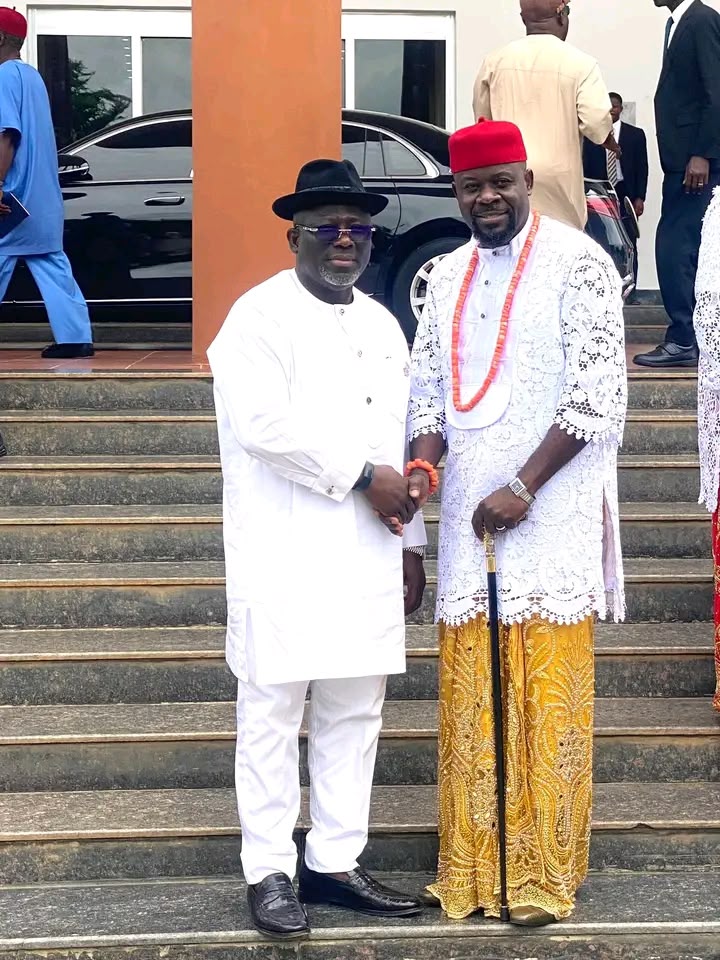
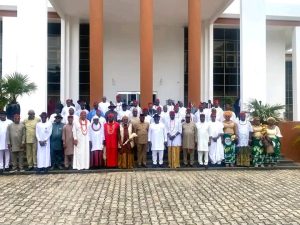
It is against this backdrop that the recent courtesy visit by the leadership of the Ndokwa Nation, under the umbrella of the Ndokwa Neku Union (NNU), to His Excellency, Rt. Hon. Sheriff Oborevwori, Governor of Delta State, deserves commendation and support from all well-meaning sons and daughters of Ndokwa land.
Led by the President General of Ndokwa Nation, Comrade Chief Amechi Asugwuni, the high-powered delegation comprising elected and appointed officials, political leaders, and traditional rulers demonstrated a mature and responsible approach to advancing the interests of the Ndokwa people. Their visit was not an exercise in political patronage; rather, it was a deliberate effort to deepen engagement with the state government and place critical developmental priorities before the Governor.
The delegation rightly appreciated Governor Oborevwori for the infrastructural projects already delivered across Ndokwa communities and Delta State as a whole. More importantly, they used the opportunity to advocate for transformative initiatives that have the potential to redefine the economic and social future of Ndokwa Nation. These include the long-awaited Okpai Independent Power Plant Step-Down project, the review of the DESOPADEC Law, the establishment of state tertiary institutions within Ndokwa Nation, and the expansion of road infrastructure across Ndokwa communities.
These requests are not mere political demands. They are strategic developmental priorities capable of unlocking economic growth, creating employment opportunities, improving educational access, and enhancing the quality of life for thousands of Ndokwa people.
The significance of this engagement extends beyond the specific projects discussed. It sends a powerful message that Ndokwa Nation is committed to constructive partnership rather than needless political antagonism. There is a difference between holding government accountable and engaging in constant confrontation that yields little practical benefit. Communities that maintain open channels of communication with government often position themselves more effectively to attract investment, secure policy attention, and accelerate development.
Development is rarely achieved through hostility. It is built through relationships, sustained advocacy, diplomacy, and the ability to articulate community needs in a manner that encourages action rather than resistance. The NNU leadership understood this reality and acted accordingly.
Equally noteworthy was the unanimous Vote of Confidence passed by the National Executive Council of the NNU in recognition of Governor Oborevwori’s inclusive leadership and commitment to infrastructure development. Such recognition does not diminish the Ndokwa people’s right to continue advocating for their interests. Instead, it strengthens the foundation for future engagement by acknowledging progress where it exists while respectfully seeking more.
Political maturity requires communities to recognize that governance is a continuous process of dialogue and partnership. Those who seek development must be willing to engage decision-makers, build consensus, and create opportunities for collaboration.
The recent visit exemplifies this principle.
As Delta State continues its development journey, Ndokwa Nation stands to benefit greatly from a leadership approach that combines advocacy with diplomacy, firmness with respect, and ambition with strategic engagement.
The courtesy visit to Governor Oborevwori was therefore not merely ceremonial; it was a forward-looking investment in the future of Ndokwa people.
The road to sustainable development is paved not by unnecessary political cantankerousness, division, or perpetual conflict, but by unity of purpose, constructive engagement, and a shared commitment to progress. The leadership of Ndokwa Nation has demonstrated this wisdom, and their example deserves recognition and support from all who desire a more prosperous future for Ndokwa land.
- Dike is a political strategist