By Toyin Falola
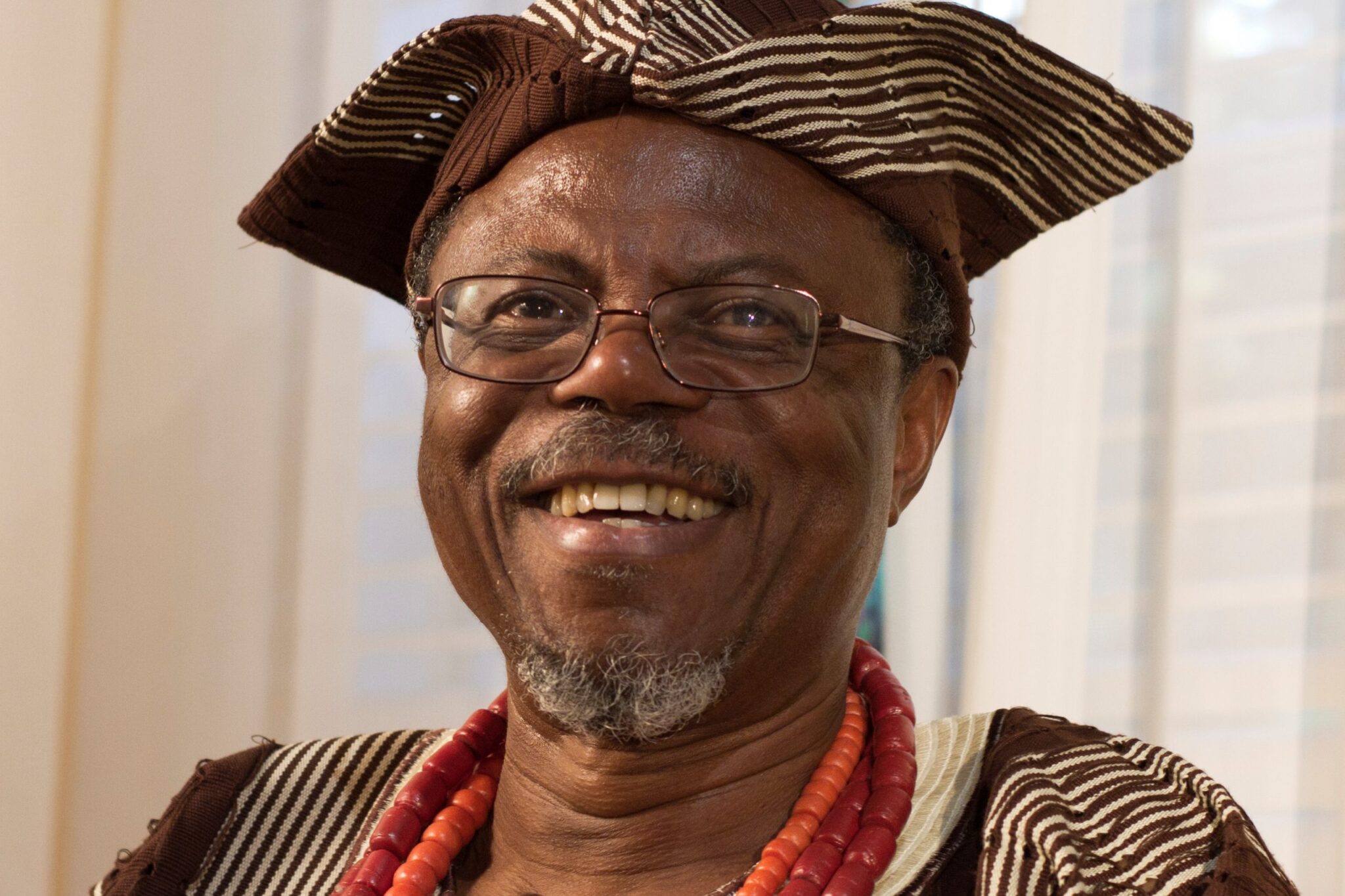
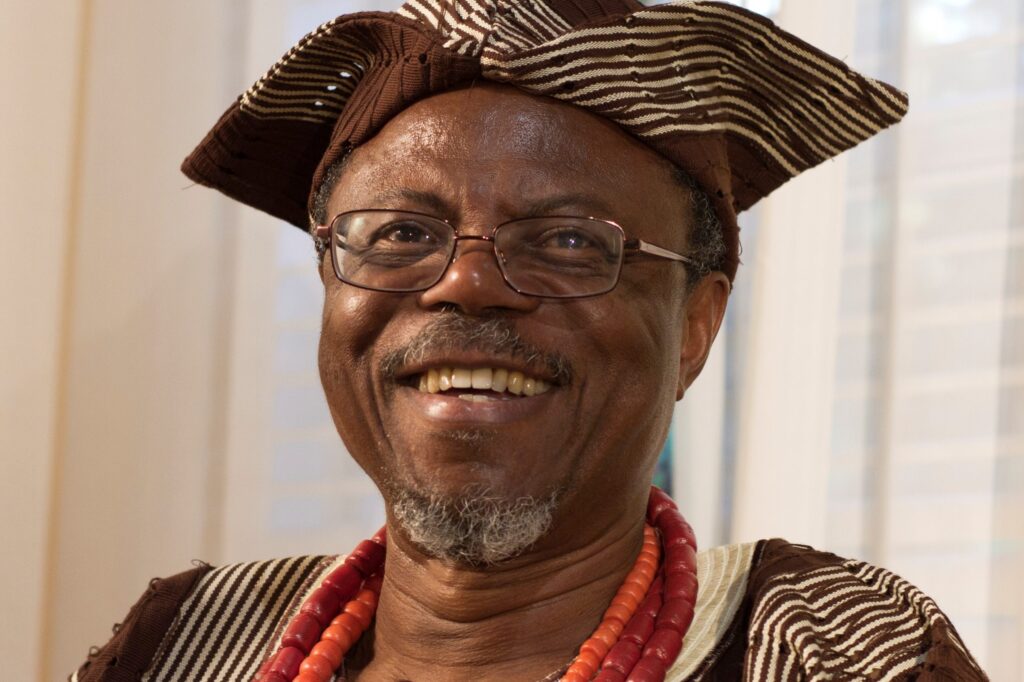
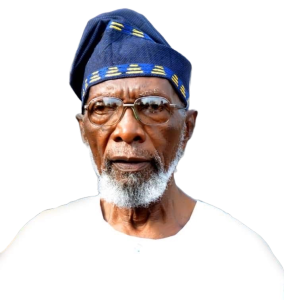
On May 14, 2026, the academic world was thrown into sadness by the news of the demise of one of the country’s pre-eminent Marxist scholars. At 92, Dr. Samuel Olusegun Ọṣọba left this earth in a tranquil manner at his Ijẹbu-Ode residence. The message, which was first disseminated by his family and loved ones who had been vigilantly monitoring his life and legacy for many decades, swiftly spread among academic circles, trade union networks, civil society organizations, and the dispersed geography of the Nigerian left. There was more to Osoba than just a historian who had died. The sort of academic whose life had been a historical argument in and of itself, a prolonged proof that intellectual devotion and moral clarity are not incompatible with professional survival. He was that kind of scholar.
It was without a doubt correct and affectionate that he was referred to as a “radical lecturer” and “a father-figure of radicalism” at Obafemi Awolowo University, Ile-Ife. These descriptions were an attempt to come to terms with the distinctive intellectual and human attributes that made Osoba irreplaceable in the academic and public life of Nigeria. He taught and did research in the Department of History, Obafemi Awolowo University. His tenure was intellectually revolutionary. I started my PhD training with Professor S. A. Akintoye who successfully ran for Senate in the Second Republic and had to leave the Department. Dr Osoba then took over as my supervisor. Akintoye consolidated his fame by becoming the incurable leader of the Yoruba secessionist movement to create the Oduduwa Republic. Two great scholars of different orientations, the stuff of a great comparative story. A memoir of my college years is in the making, where in-betweenness will be elevated to its greatest heights.
Osoba’s love for history was contagious, and his ability to make complicated historical events comprehensible to his students, despite the embedded convolutions of philosophy, appeared to many a gift of nature. He knew how to make history come alive, to make it relevant and interesting. His seminars were typically vibrant and participatory but always focused on fostering critical thinking and sound analysis, supported by evidence. Many were conservatives, but he did not turn the classroom into a Pentecostal mission. One path never leads to the market!
Osoba, in his element, could help students grasp that history was not a record of the past, but a tool for understanding the present. Osoba taught his students how to read power, how to follow the structures of power throughout time, and how to investigate the ideological assumptions behind ostensibly impartial descriptions of events. He made intellectuals. Osoba’s radicalism was social, conversional, and profoundly human. He knew that the intellectual life is as much lived in hallways and canteens and over shared meals as in lecture theatres and he took his politics into all those areas without self-consciousness. Under his influence, the University of Ife became a veritable breeding ground for a generation of trade unionists, civil society activists, lawyers, journalists and politicians who bore the imprints of his teaching into Nigerian public life for decades. People around him gained clarity about the link between scholarship and social duty, mentoring and inspiring young scholars, guiding and nurturing them as they begin their academic careers.
Osoba’s scholarly production was vast and relevant to public intellectualism in the Nigerian environment of his time. He was a specialist of the social and economic history of Nigeria, approached from a Marxist perspective. He was interested in the structures of exploitation and accumulation, in the relation between colonialism and the emergence of a comprador bourgeoisie, in the ways the colonial encounter had shaped class formation in Nigeria and in the mechanisms through which the postcolonial ruling class had consolidated power at the expense of the majority.
By all accounts, his work on corruption in Nigerian public life was pathbreaking. His pioneering assessment of the role of corruption in public life and his original contribution on neocolonialism are works that the current generation of scholars of decolonization could do well to re-visit. But many have also come to terms with the fact that the processes of nation-building have been corrupted by the bourgeoisie and its allies, a phenomenon Dr. Osoba saw long before others. He has dedicated his whole life battling for the development of the Nigerian populace.
Perhaps the single act for which Dr. Osoba is most generally recognized outside strictly academic circles is his co-authorship of the Minority Report and Draft Constitution for the Federal Republic of Nigeria, 1976. It is one of the most fascinating sagas in Nigerian intellectual and constitutional history. In 1976, General Murtala Mohammed appointed Dr. Osoba and Dr. Yusufu Bala Usman to serve on the Constitutional Drafting Committee. They disagreed with the trend of the discussions of the majority members and together they wrote the Minority Report and Draft Constitution for the Federal Republic of Nigeria, 1976.
The Committee had been called together to offer Nigeria a new constitutional framework after years of military dictatorship. It was constituted mostly of conservative attorneys, administrators and establishment individuals whose constitutional imagination was roughly in line with the inherited Lugardian system. Osoba and Usman voted against the motion. The two broke ranks with fellow conservatives who made up the bulk of the constitution writing committee to produce and submit their own minority report that was pro-people as opposed to what many Nigerians perceive today as the pro-Lugardian Constitution.
There is no easy way to measure a life like Osoba’s. By the yardsticks that count, Osoba spawned generations of intellectuals who took his analytical framework into law, media, activism and politics. He contributed to establish a legacy of radical scholarship in Nigeria which, battered as it was by military rulers and economic catastrophe, has never quite faded. His judgment of Nigerian power and corruption has been vindicated repeatedly. He was on a constitutional drafting Committee with people with conservative temperament. And he drafted the paper that other men were too careful or too cautious to write. He died at 92, intellectually unbowed.
His many writings and radical ideas are till date used to motivate and empower comrades in Nigeria’s battle for independence and social justice. That’s no minor thing. Osoba survived a nation with a long tradition of killing its honest minds. He lived life on his own terms.
In his book My Watch, General Olusegun Obasanjo regarded Osoba as “the last true social critic”. It was Obasanjo who had ruled the Minority Report “non-existent.” The irony can be intentional or not. What it does prove, however, is that even those who fought against Osoba’s impact, in the end, had to admit his greatness. This is sometimes the best measure of an intellectual life, such reluctant acceptance from the most powerful corners.
Dr. Samuel Olusegun Ọṣọba was more than a famous historian. He was something uncommon, a dependably honest one. He informed Nigerians what their nation is and how it came to be such and he told them at a time when stating the truth had a cost. He paid the price uncomplainingly.
He mined archives
As one rifles through forgotten flames.
He rescued from dust
The hard memory of labor,
peasants and merchants,
anonymous hands
That built empires on bruised backs.
He taught us that history
Was more than the anthem of monarchs,
more than governor’s elegant rhetoric.
It was the scream at the marketplace,
perspiration on rail lines,
absence of voice at dinner tables
under colonial ensigns.
Marx leaned on his shoulder.
His ideas were not ghosts from afar
but a lantern
Held cautiously against an African storm.
Class struggle took flesh
in cocoa farms and busy ports,
manifest in unions,
raging through the poor.
Osoba,
scribe of resistance.
Your pen knew no rest.
You wrote against riches
squandered like champagne.
You wrote against power,
as if blood alone could forge it.
You wrote against a development
that never fed the hungry.
You taught us history
wasn’t neutral terrain.
It was living, breathing ground
where the seeds of our dead
squabble with the sons of the living.
Your words are still marching—
through classrooms.
through fiery conversations.
through young Africans
seeking liberties bigger than catch phrases.
The archives remember you.
Workers remember you.
The guilty conscience of Africa remembers you.