By Robert Egbe
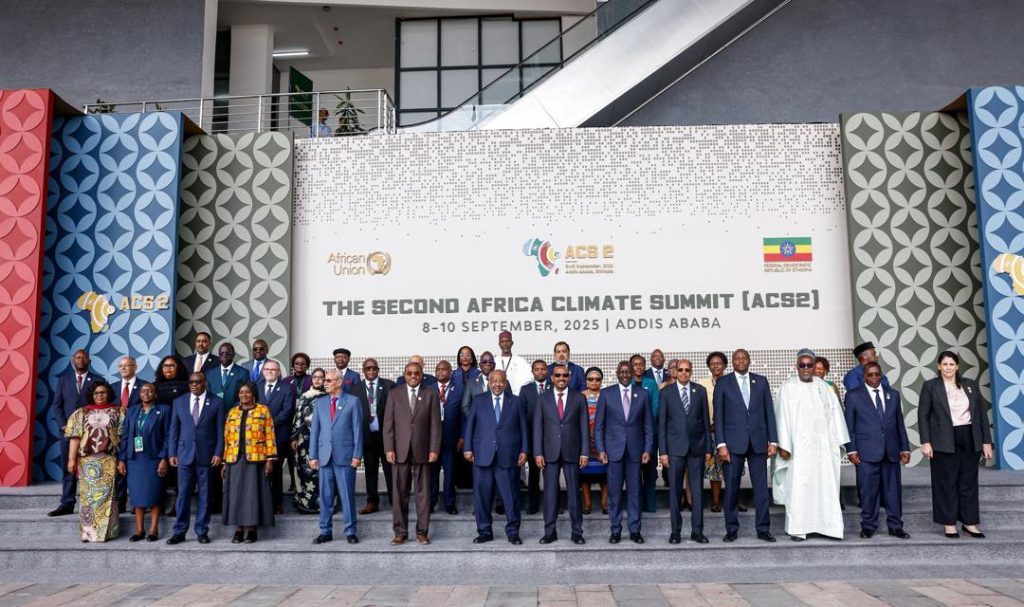
As African leaders wrapped up the Second Africa Climate Summit (ACS-2) in Addis Ababa last week, one message stood out clearly: the continent can no longer wait for others to set its climate agenda. For Nigeria, Africa’s most populous nation and its largest oil producer, the stakes could not be higher.
Held under the theme “Accelerating Global Climate Solutions: Financing for Africa’s Resilient and Green Development,” the summit pushed for a united African position ahead of COP30. Leaders demanded fair climate finance, massive renewable energy investment, and an end to the old model where Africa’s raw materials leave the continent with little benefit to its people.
Nigeria came to Addis with a complicated story. On one hand, the country still depends on oil and gas for most of its foreign exchange earnings. On the other hand, it sits on enormous renewable energy potential — from abundant sunshine to large wind corridors and hydropower resources.
With more than 90 million Nigerians still lacking reliable electricity, the country is under pressure to expand access without worsening its already high emissions. The summit’s call for a just energy transition resonates deeply in Nigeria, where communities in the Niger Delta continue to live with the scars of oil pollution, even as young innovators build solar mini-grids and pay-as-you-go clean energy systems across rural areas.
Financing Africa’s Future — Nigeria’s Test Case
African leaders in Addis called for at least US$50 billion annually in new financing to support climate innovations across the continent. Nigeria stands as a litmus test for how such funds could be used:
- Renewable energy scale-up: Programmes like the Rural Electrification Agency’s Solar Power Naija show the potential for clean power to reach underserved communities — but financing remains a bottleneck.
- Climate resilience: From desertification in the North to flooding in the South, Nigeria illustrates why Africa needs predictable, grant-based climate funding, not loans that pile on more debt.
- Critical minerals diplomacy: Africa holds vast reserves of lithium, cobalt, and rare earths. Nigeria itself has lithium deposits in states like Nasarawa and Kogi. Leaders in Addis warned that if Africa only exports raw minerals, it risks repeating the mistakes of the oil era. For Nigeria, this is a chance to demand local processing and job creation, rather than shipping out raw resources.
The World Meteorological Organisation stressed that only 40 percent of Africans have access to early warning systems. Nigerians know this gap well: last year’s devastating floods, which displaced over 1.4 million people, could have been less severe with better forecasting and response systems. Improved climate data, stronger meteorological services, and community-based alert systems were all highlighted at the summit — areas where Nigeria urgently needs investment.
While the Addis summit projected Africa as a solutions hub, some civil society groups raised concerns that gas development is still being quietly supported, even as leaders publicly call for a clean energy future. For Nigeria — where government plans still lean heavily on gas as a “transition fuel” — this contradiction reflects the difficult balancing act of development, energy security, and climate goals.
Why This Matters for Nigerians
The Addis Ababa Declaration, adopted at the summit, will shape Africa’s bargaining position at COP30. For Nigerians, its key points are not abstract diplomacy but urgent priorities:
- Clean, reliable power for homes, schools, and businesses.
- Financing that helps communities adapt to droughts, floods, and rising seas without sinking the country into more debt.
- A new economic model where Nigeria’s resources — whether oil, gas, or lithium — drive inclusive development, not exploitation.
The Second Africa Climate Summit has set the stage for Africa — and Nigeria in particular — to push for climate justice on the global stage. But as activists in Addis warned, what matters is not only declarations but delivery. For Nigerians living with blackouts, floods, and heatwaves, the question is simple: Will the promises made in Ethiopia translate into real change at home?