By Martins Ogunlade
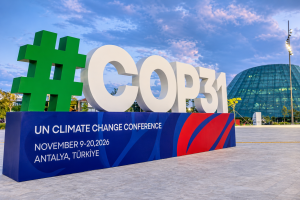
As the 31st United Nations Climate Change Conference (COP31) in Antalya, Türkiye, comes to an end, the Global North will inevitably seek to portray the summit as a triumph of “pragmatism” and “implementation”. Yet for the 54 nations of the African Group of Negotiators (AGN) and the broader Global South, the view from the negotiating rooms tells a starkly different story.
COP31 was billed as the moment global promises would finally meet delivery. Instead, it laid bare a widening geopolitical divide, one where wealthy nations and fossil fuel multinationals increasingly dictate the terms, dilute historical obligations, and leave developing economies to shoulder a crisis they did not create. As Antalya’s negotiations conclude, the urgent question for Nigeria, Africa, and the Global South is not simply what made it to the conclusion texts, but how to bridge the gap between diplomatic rhetoric and frontline reality.
The clearest indictment of COP31 is the retreat on fossil fuels. Three years after COP28 called for a transition away from fossil fuels, negotiations in Antalya saw fierce resistance from petro-states and industrialized economies. Rather than binding transition timelines, powerful blocs continued to lean into technological fixes and corporate-led solutions such as carbon capture and storage. For Africa, this is a glaring double standard. Rich nations continue to pursue their own energy and industrial interests while lecturing developing economies on the significance of decarbonization.
Yet, COP31’s electrification and clean energy announcements expose persistent inequalities in the global energy transition. Türkiye secured over $26 billion in investment deals and financing arrangements, including a preliminary $15 billion renewable energy deal with China. Its Electrification Delivery Package also brought together over 150 countries, the European Union and 260 businesses, with annual investment plans exceeding $156 billion for electricity grids, renewable energy and storage. However, these commitments raise a critical climate justice question: who has the capital, technology and institutional capacity to benefit from the transition?
At the heart of the Antalya deadlock was the erosion of developed countries’ financial obligations under Article 9.1 of the Paris Agreement. African negotiators resisted attempts to weaken these commitments, pushing for at least $120 billion annually in adaptation finance by 2035. However, the November 22 draft dropped this specific target, retaining only a general commitment to triple adaptation finance. The proposed Antalya-to-Addis Ababa Roadmap therefore offers a financing pathway, not a binding guarantee.
The gap remains enormous: developing countries need an estimated $305 billion annually for adaptation by 2035. Africa, despite contributing less than 4% of global emissions, loses 2–5% of its GDP annually to climate extremes and receives just 3% of global climate finance, much of it as loans. For debt-burdened countries like Nigeria, climate finance that deepens indebtedness undermines the very solidarity it is meant to deliver.
Nowhere is this moral failure more evident than in the Fund for Responding to Loss and Damage. The Fund remains severely underfunded, exposing the gap between climate commitments and historical responsibility. As António Guterres, UN Secretary-General, highlighted at COP31, nine major oil companies earned $95 billion in a single quarter, while the Fund had received just $600 million. Meanwhile, vulnerable communities across Africa continue to bear the costs of climate disasters, reinforcing the need for polluter-funded climate reparations rather than voluntary contributions.
This injustice is compounded by growing geopolitical fragmentation, as powerful economies prioritise industrial competitiveness and access to critical minerals while resisting reforms that would make climate finance more accessible. Africa remains central to the global energy transition but marginalised in its economic benefits.
With COP32 scheduled to take place in Addis Ababa in November 2027, Africa must move beyond diplomatic appeals and pursue a more decisive strategy.
Africa’s priority must be to turn the road to Addis Ababa into an accountability mechanism. Leveraging its COP32 presidency and working with the G77+China and small island states, African negotiators must secure measurable financing commitments, clear milestones and transparent reporting under the Antalya-to-Addis Ababa Roadmap. Africa must also defend the 1.5°C target and resist the normalisation of temperature overshoot.
Equally important is the demand for accessible, grant-based climate finance. African countries must reject the classification of commercial loans as climate finance and push for global levies on fossil fuel profits, shipping and aviation to generate predictable, non-debt funding. Climate commitments must translate into affordable finance, technology transfer and direct investment in African energy systems, adaptation and loss and damage.
Ultimately, Africa must assert sovereignty over its energy transition. Through the African Continental Free Trade Area (AfCFTA), governments must prioritise local mineral processing, regional manufacturing and South-South partnerships. The goal must be to move beyond exporting raw materials towards developing and owning the technologies, infrastructure and industries driving the global energy transition.
COP31 has exposed the limits of climate multilateralism that celebrates investment announcements and ambitious targets without guaranteeing their implementation. For Africa, the success of COP32 must be measured not by promises made or capital mobilised, but by whether vulnerable countries gain equitable access to finance, technology, infrastructure and the economic opportunities needed to secure a just energy transition.
As the world turns toward Addis Ababa, Africa must enter the next round not as a supplicant begging for crumbs, but as a unified political and economic bloc demanding climate justice, corporate accountability, financial reparations and sovereignty over its development choices. The road to COP32 must be more than another diplomatic countdown. It must become the road to accountability.
- Ogunlade Olamide Martins is the Associate Director at Corporate Accountability and Public Participation Africa (CAPPA). He writes from Lagos, Nigeria.