By Olayinka Oyegbile
Universities have been described as critical agents of developments in Africa.
Speaking at the University of Ibadan on Monday, November 2, 2026, during a special investiture lecture in honour of the new Vice Chancellor of University of Ibadan, Professor Peter Olapegba, Ogundiran challenged the new helms man to steer the university in the direction of knowledge production and relevance to the community, nation, and the world at large.
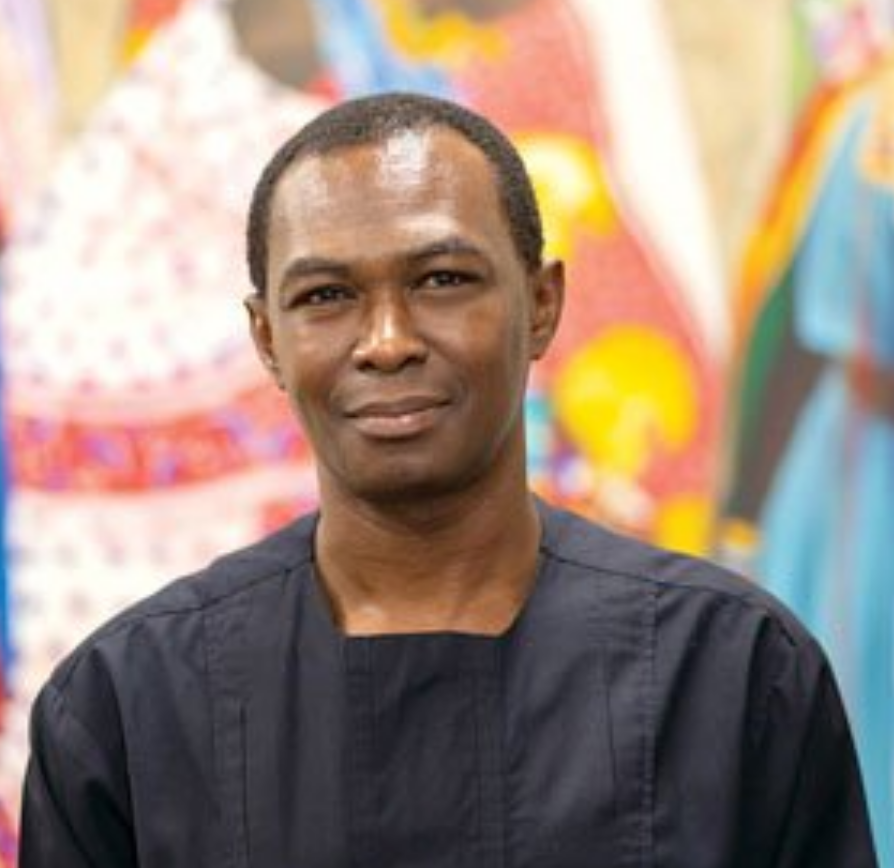
Speaking on the topic, “The African University in a new world order: Imperatives of knowledge sovereignty and relevance”, Ogundiran, who is Cardiss Collins Professor of Arts and Sciences, Professor of History, and Courtesy Professor of Anthropology and of Black Studies at the Northwestern University, USA., said “The university is a critical agent of African development. What happens here matters for the world. Africa cannot fully achieve its potential without strong universities that produce knowledge, educate citizens, solve problems, develop human talent, and expand what society believes is possible.”
He said education in Nigeria must move from diagnosis to implementation and that students must not be mere consumers but creators with minds to develop, talents to cultivate and ideas to release into the world through purposeful collective action.
To those who think investment in university education was a waste or misplaced, he said a university’s greatest contribution is human and social capital, on which a currency value cannot be put. Turning to the value of researches done by universities, the don averred that “University research heals the sick, prevents disease, improves crops and livestock, produces informed citizens, raises living standards, preserves heritage, and informs public policy. UI has produced over 320,000 graduates since its inception 78 years ago. These graduates have transformed our institutions, communities, and society through their expertise, creativity, and civic engagement.”
He said African universities must help the continent to develop by pursuing knowledge sovereignty and relevance saying, “Knowledge sovereignty does not mean isolation. It means learning from others without ceasing to think for ourselves. It also requires infrastructure. Ideas need libraries, laboratories, reliable electricity, digital access, archives, publishers, ethical review, and well-trained technicians and administrators.”
 Prof Ogundiran paid homage to African ancestors saying they contributed to knowledge before the advent of conventional universities. According to him, “Our ancestors contributed to the idea of the university. Yes, they privileged orature over literacy, but the society they developed was no less sophisticated in culture, arts, philosophy, and basic sciences than those in Oxford, Paris, or Bologna during the thirteenth century.”
He said Africa’s knowledge industry must transcend colonial history in the understanding of what the university was in order to more clearly envision what it could be. He said partnerships with Europe and North America were desirable, but called for deepen engagement with Asia, the Middle East, Latin America, and other African countries.
He said the continent’s population places it at an advantageous position to drive the global economy, “The demographic opportunity opens the door for Africa to drive the global economy, not through consumption, but through productivity. Africa must avoid becoming a training ground that sends cheap or highly skilled labor to the Global North. It must not bear the cost of training our best, while other societies receive all the benefit. Of course, I realize that mobility is human; but migration need not mean permanent loss for Africa.”
On the use of Artificial Intelligence (AI) in education, he said it must be deployed to advance education rather than fear it. This according to him is because, “Artificial intelligence is transforming how knowledge is produced, organized, circulated, and controlled. Activities once viewed as distinctly human—including writing, translation, diagnosis, coding, artistic creation, and scientific reasoning—are increasingly assisted or performed by AI. It can search vast bodies of information, identify patterns, generate hypotheses, design experiments, and help make discoveries. While earlier technologies mechanized physical labour, communication, and calculation, AI increasingly mechanizes aspects of cognition itself. Universities should therefore move beyond the simple question of whether students should use AI. They must ask what knowledge students need to evaluate AI, which forms of human judgment will become more valuable, what now counts as original scholarship, and who controls the infrastructure mediating knowledge.”
Prof Ogundiran added that AI presents both challenges and opportunities for Africa. He advocated the development of an African system that encourages researchers and students to develop their datasets so as not to depend on models they did not build, algorithms they cannot audit, and datasets they do not control.
He called on the new vice chancellor, Prof Olapegba, to lead the institution by “making AI literacy a curriculum requirement, embedding AI across disciplines, establishing an African AI institute, creating an African Knowledge Digital Commons, developing shared computing capacity, and adopting robust standards for data integrity and human oversight.”
Tracing the relationship between Northwestern University and University of Ibadan, he said
“Professor Akin Mabogunje, the African doyen of geography, completed his influential book Urbanization in Nigeria while serving as a visiting scholar at Northwestern University in 1963, while Professor Isaac Adewole, a former Vice-Chancellor of this university, and former Minister of Health, and now Nigerian Ambassador to Canada, has been an adjunct Professor at Northwestern’s School of Medicine for many years,” adding that “great universities do not flourish in isolation. They flourish through relationships.” He therefore called for stronger ties between both institutions.
Prof Ogundiran called on the new helmsman to realise that public funding was not enough to run a viable institution. He therefore appealed to him to “consider launching a major endowment drive to raise hundreds of billions of naira with research funding as its primary goal. This might involve elevating the Office of Advancement’s Director to executive status with a seat on your cabinet, supported by five associate directors: one for alumni relations, one for industry and corporations, one for government relations, one for high-net-worth individuals, and one for community relations. These are offices for fundraising professionals, not academics.
an empty mouth does not make chewing noises. We cannot expect cutting-edge research from our postgraduate students and also expect them to fund their own research. Knowledge sovereignty requires investment.”
Professor Olapegba is the first Vice Chancellor from the institution’s Faculty of Social Sciences in the 78-year-old institution.