

By Akin Ogundiran
Introduction
First, I would like to thank the University Orator for that very generous introduction.
I also want to thank our Chief Host, Professor Adebowale, for his outstanding and selfless service to this institution. I was here two days ago to be part of the moving valedictory ceremony in his honor. Congratulations on a job well done!
It is a great pleasure to return to my alma mater to deliver this lecture marking the inauguration of the 14th Vice-Chancellor of the University of Ibadan. The first of its kind in the history of this storied institution. Ko seleri, as my people in Ibadan would say. When I arrived at this institution as a postgraduate student thirty-seven years ago, I never imagined I would one day stand before an august audience such as this to speak at such an important moment in the life of this great university.
I thank the inauguration planning committee, led by Professor J. O. Ajiboye, for inviting me to be part of this joyous occasion. Please let us give this committee a round of loud applause.
When I told my supervisors at Northwestern University that my alma mater had called me for an important assignment and I had to go, meaning I would miss several classes, they understood. They reminded me that Northwestern University and the University of Ibadan have enjoyed a long and productive relationship for more than 70 years.
Let me give you two examples: Professor Akin Mabogunje, the African doyen of geography, completed his influential book Urbanization in Nigeria while serving as a visiting scholar at Northwestern University in 1963. Professor Isaac Adewole, former Vice-Chancellor of this university, former Minister of Health, and now Nigerian Ambassador to Canada, has been an adjunct Professor at Northwestern’s School of Medicine for many years.
These relationships remind us of something that I will return to throughout this lecture: great universities do not flourish in isolation. They flourish through relationships.
Congratulatory Letters and Gifts from Northwestern University
Before proceeding, I have the honor of performing a pleasant ceremonial duty.
Northwestern University’s President, Professor Mung Chiang, through the Vice President for International Relations, Ms. Dévora Grynspan, and the Dean of the Weinberg College of Arts and Sciences, Professor Adrian Randolph, sent formal congratulatory messages to Professor Peter Olapegba on his inauguration as the 14th Vice-Chancellor of the University of Ibadan. They also sent gifts to mark this important occasion and recognize the longstanding relationship between our two universities.
Professor Olapegba, on behalf of Northwestern University, I am pleased to present these letters and gifts to you.
[Presentation of congratulatory letters and gifts.]
I hope that once you have settled into office and begin reviewing UI’s relationships with its international partners, you will make Northwestern University one of your early visits. We look forward to welcoming you to Chicagoland.
Opening
Ladies and gentlemen, let me now turn to the business of my lecture.
This inauguration lecture celebrates a change in leadership. An inauguration lecture of this kind typically asks where society is going, what is changing in the world around us, and what kind of institution the university must become if it is to meet that world with confidence.
In his speech at the last United Nations General Assembly in New York, His Excellency President Bola Ahmed Tinubu, GCFR, called for UN Security Council reform, saying, “The authority to speak for humanity carries an obligation to represent it” and “the world of 2026 cannot remain captive to the distribution of power in 1945.” He invited the rest of the world to recognize Africa as a partner, not a supplicant. He insisted that Africa must control its technological future and pursue partnerships on its own terms, turning its youthful population, the ingenuity of its people, natural resources, and expanding markets into engines of growth.
Mr. President’s speech echoes the rumblings of a changing world order, one that can no longer be contained within the grip of the North Atlantic Treaty Organization (NATO). Taking a cue from President Tinubu’s call to action at the UN General Assembly, my central question this afternoon is: What must the African university become to help Africa achieve the goals Mr. President presented to the United Nations General Assembly through Vice President Kashim Shettima? To answer this question, I have titled this lecture: The African University in a New World Order: Imperatives of Knowledge Sovereignty and Relevance.
I chose this title because I strongly believe, as do all of us in this room, that the university is a critical agent of African development. What happens here matters for the world. Africa cannot fully achieve its potential without strong universities that produce knowledge, educate citizens, solve problems, develop human talent, and expand what society believes is possible.
Economic and Social Impact of the University of Ibadan
Public discourse often treats universities as mere consumers of public money: salaries, infrastructure, and operational costs. Those costs matter, especially when government subventions remain precariously limited. But let us for a moment set aside the usual question: “What would it cost Nigeria to maintain the University of Ibadan?” Instead, I want to ask, “What would it cost Nigeria not to have the University of Ibadan?” This university gives back more than it takes. My preliminary estimate puts its annual economic footprint in Ibadan alone at nearly N70 billion. But more importantly, the University’s greatest contribution is human and social capital, and we cannot put a currency value on this. University research heals the sick, prevents disease, improves crops and livestock, produces informed citizens, raises living standards, preserves heritage, and informs public policy. UI has produced over 320,000 graduates since its inception 78 years ago. These graduates have transformed our institutions, communities, and society through their expertise, creativity, and civic engagement.
Professor Olapegba’s own journey illustrates this point. Today, the first Vice Chancellor from the Faculty of Social Sciences at this 78-year-old institution will take office. This gentleman arrived at UI 34 years ago as an undergraduate student. Then he was simply known as Peter (or Pita/Peteru as my people in Igbo-Ora and Ibadan would say). He was much older than most of his peers when he arrived here. His journey might tell us why. After a mobile childhood from Ibadan to Ilutitun in Ondo State, then to Lanlate, where he completed his secondary education, he moved to Lagos and worked as a sales boy at Oke Arin Market for 7 years before gaining admission to the University of Ibadan to study Psychology in 1992. Professor Olapegba earned his BSc in Psychology in 1997, and after completing his National Youth Service, he returned to his alma mater to pursue his Master’s degree, which he earned in 1999. After a brief stint at the National Examination Council (NECO) as a Research Officer, he joined the University of Ibadan on June 1st 2000, as an Assistant Lecturer. It took him 8 years to earn his PhD in Applied Psychology. But it took him only 6 years after his PhD to be promoted to professor at this prestigious university. That is a record. By the time he was promoted to professor, he had published more than 100 articles in journals, conference proceedings, and books. Today, this accomplished scholar, who has done impactful research in Applied Social and Health Psychology, and is also an astute administrator and a committed civic leader, will formally become the 14th Vice-Chancellor of the University of Ibadan.
His story tells every young person: the circumstances of your beginning do not set the limits of your future. Another moral of his story is that a university admitted a sales boy and created the environment in which he became an excellent student, a lecturer, a professor, an administrator, and eventually a Vice-Chancellor. This personal success is our collective success. It is social mobility made possible by an institution, mentors, professors, parents, guardians, friends, colleagues, and wife.
The story of the incoming VC should also remind the university to look beyond polished beginnings. The next outstanding scholar may arrive late, come from a small town, lack social connections, or need financial help. Mentoring, scholarships, and institutional confidence can change a life’s direction, and that of a family. Universities build people. Eventually, those people are called upon to build universities. That is the responsibility before our new Vice Chancellor.
Argument
I make two arguments in this lecture.
First, the world order is changing. The post-Cold War global system is fragmenting, and power is becoming more widely distributed. Artificial intelligence is reorganizing knowledge. Demographic change is shifting a growing share of the world’s future population, labor force, and markets toward Africa and the wider Global South. Climate change is reshaping livelihoods, intensifying resource pressures, and driving displacement and conflict.
Second, the changing world order presents Africa with a choice: continued dependency or productive power. African universities must help determine that outcome by pursuing knowledge sovereignty and relevance together.
Knowledge Sovereignty and Relevance
Let me start with the second argument:
Knowledge sovereignty is the capacity to decide which questions matter, produce reliable answers, own the institutions through which knowledge circulates, and enter partnerships as an intellectual equal. Knowledge sovereignty does not mean isolation. It means learning from others without ceasing to think for ourselves. It also requires infrastructure. Ideas need libraries, laboratories, reliable electricity, digital access, archives, publishers, ethical review, and well-trained technicians and administrators.
Relevance means that the university must be committed to advancing the needs of the society it serves. Some research may solve an urgent problem today. Others may preserve a language, explain a historical process, or create an idea whose practical importance is not yet visible. Relevance should not be confused with immediate popularity, immediate material benefits, or “What can you do with that course? question. Universities are not vocational schools. They exist to cultivate minds that can think, create, adapt, and lead. Relevance means preparing graduates for meaningful, productive lives—not merely their first jobs.
A perennial question on our campuses and beyond their gates is: Can the African university decide what is worth knowing, produce that knowledge with authority, and turn it into meaningful change?
History of the University of Ibadan and How Relevance Has Been a Consistent Goal
Before we answer this question for the University of Ibadan, let us first turn to history, to understand where the University of Ibadan came from and where it has been. This will give perspective on the legacy Professor Olapegba will build upon.
As a Yorùbá proverb reminds us, bí ọmọde ò bá bá ìtàn, yóò bá àròbá; àròbá sì ni baba ìtàn.
“If the young person does not encounter history directly, he/she will encounter what has been handed down about it.”
The University of Ibadan is a product of grand vision and methodical planning. It emerged from two colonial commissions for higher education. The Asquith Commission considered what university education should look like across Britain’s colonies, while the Elliot Commission addressed British West Africa’s needs for universities and where such institutions should be located. Established in 1948, University College Ibadan prepared students for University of London degrees. Its curriculum emphasized liberal arts, basic sciences, and medicine, excluding applied science and technology. Although geographically African, its institutional DNA was substantially British.
On the eve of independence, the Federal Ministry of Education appointed the Ashby Commission to investigate Nigeria’s higher-education needs. It recommended a more responsive university system and supported transforming University College Ibadan into a fully autonomous university. Professor Kenneth Dike’s appointment as Principal of the University College Ibadan in 1960 and Vice-Chancellor of the University of Ibadan in 1962 marked a decisive turn. With Professors J. F. Ade Ajayi and Saburi Biobaku, Dike pioneered the Ibadan School of History, establishing African societies as subjects of historical inquiry. Oral traditions, archaeology, linguistics, and written records became complementary sources for reconstructing Africa’s past.
The decolonization of the university began in earnest. Professor Bolaji Idowu’s Olodumare: God in Yoruba Belief explored African religious thought. Professor Ayo Bamgbose connected African languages with technological development and national unity. At University of Ife, Professor Akinsola Akiwowo’s Àṣùwàdà Theory of Sociation sought to Africanize sociology. I see a related aspiration in Professor Peter Olapegba’s emphasis on developing culturally validated psychological methods. Whether investigating widows in Enugu, mental illness in Ibadan, or youth sexual behavior on university campuses, he has insisted that the psychological theories and measurements must fit the worldviews, culture, and ontology of the populations they seek to explain.
But decolonization is a process. Its final stage is indigenization, and we are not there yet. For the university to be a transformational institution, our quest for knowledge sovereignty and relevance must be tied to the indigenization of the university. This will involve placing Indigenous ways of knowing, being, and doing at the center of education and inquiry; recovering and using our ancestral epistemology and ontology as the basis of theorizing and developing new instruments of measurement. Indigenizing the university also means rediscovering the contributions of deep-time Africa’s intellectual traditions to the idea of the university, so we can better understand what the university has been—and more clearly envision what it could become.
It is true that the European Enlightenment gave us the distinctive modern features of the university as we know it: organized faculties and bounded disciplines, degrees, scholarly self-governance, and some degree of institutional autonomy. However, the university has not always been like this, and it did not emerge only in Europe. The university as an idea developed gradually from several older academic traditions across Europe, Asia, and Africa. At its core, the university in ancient and pre-modern times was an organized center of advanced learning; an academy or a community of masters and students who organized themselves around the creation, dissemination, and certification of knowledge. Africa played many roles at different times and places in the evolution of such academies. These academies, such as the House of Life at Heliopolis, House of Life at Memphis, and House of Life at Abydos, powered the intellectual, scientific, social, and political life of Ancient Egypt. The Greeks benefited from those academies. The European father of history, Herodotus, traveled to many of those Egyptian academies around 454 BCE.
Fast forward to the Medieval period. The most famous of those academies in Europe were located in Bologna, Paris, and Oxford in the eleventh and twelfth centuries. Scholars have pointed to Timbuktu as a comparable advanced center of learning that privileged Western and Saracenic thought in Arabic script. This afternoon, I am pleased to share that just 80 km from here, many centers of advanced learning also developed as early as the 11th century and flourished through the early fifteenth century. There, they studied astronomy. Masters and students discussed philosophical questions about what it means to be a person and whether a person differs from a human being. Master thinkers debated systems of governance and the principles of transcendental humanism (Ọ̀nìyàn) 700 years before the European Enlightenment. They gave us the concept of democratic monarchy and Orisa philosophy. Kings, scientists, and priestesses cultivated and supported inventions and innovations in glass, iron, and city-planning technologies. All of this happened in Ile-Ife between the 11th and early fifteenth centuries. Mhat is more, it is the only place in Africa that used mastery of chemical principles, reactions, and engineering technology to turn cheap, abundant raw materials into valuable products on a large scale—glass production. Hence, in one of my publications, I declared: “Our Ancestors Were Material Scientists.” Those glass products were used to organize society and finance power, authority, commerce, and the pursuit of life of the mind. For more than 400 years, students, pilgrims, tourists, political emissaries, and merchants from the River Niger to the Atlantic Coast, from present-day Mali to the Ikpoba River, trooped to this place of learning and innovation.
To indigenize our university, this story of advanced centers of learning in Ancient Ile-Ife and other places in Africa must be told. Our ancestors contributed to the idea of the university. Yes, they privileged orature over literacy, but the society they developed was no less sophisticated in culture, arts, philosophy, and basic sciences than those in Oxford, Paris, or Bologna during the thirteenth century. Some of you in this hall know some of this story because you have read my book, The Yoruba: A New History. I began my research for the book as a student in this university, under the tutelage of Professor Babatunde Agbaje-Williams, Professor Cornelius Adepegba, Professor Bassey Andah, and Professor Adebisi Sowunmi. My key point here is that knowledge sovereignty must be pursued within the aspirational goal of indigenizing our university, and this cannot proceed without an accurate genealogy of the university that includes the history of Africa’s intellectual traditions. We must transcend colonial history in our understanding of what the university was in order to more clearly envision what it could be.
The Current Challenges and Opportunities of the New World Order
This now brings me to my first argument—the challenges and opportunities of the New World Order. Vice Chancellor Olapegba begins his tenure amid four consequential changes in the world. First, global power and knowledge production are becoming less concentrated. Second, artificial intelligence is poised to transform how we understand humanity and produce knowledge. Third, Africa is the world’s fastest-growing region, projected to account for more than half of global population growth by 2050. Fourth, climate change is displacing people, creating new health risks, and intensifying conflict and insecurity.
Fracturing of the Liberal Order and Multipolarity
I will start with the first: the fracturing of the global liberal order. The brief period of overwhelming Western influence after the Cold War is giving way to a contested world. China is a global economic and technological power. India is rising. BRICS has expanded. Middle powers are asserting themselves.
Africa now has access to more global partners, but this does not automatically mean greater power. As some of us can attest, more suitors do not guarantee a better marriage. Without expertise, coordination, and negotiating discipline, we may simply exchange one dependency for another. Oil and lithium become assets only when knowledge and institutions turn them into productive capacity and bargaining power.
African universities must therefore become strategic infrastructure. We need expertise on China, India, Brazil, and the Gulf. Courses in Mandarin, Portuguese, Japanese, and Yoruba languages can co-exist. We must understand the world directly, not always through scholarship produced elsewhere. Partnerships with Europe and North America remain valuable. But we must deepen engagement with Asia, the Middle East, Latin America, and other African countries.
UI already has strong foundations to build on. Through the African Research Universities Alliance, ARUA, universities pool resources together to study climate change, renewable natural resources, poverty, and inequality. UI also hosts PAULESI, the Pan African University Life and Earth Sciences Institute, which includes Health and Agriculture. This institute supports continental collaboration in research and training. The task now, with government support, is to scale up these networks to build African capability. UI must take on leadership roles in this effort. Mr. Vice-Chancellor, your experience managing PAULESI and as the past DVC of Administration gives you the edge to take on this leadership role.
Demographic Shifts
On Demography. Europe and East Asia are aging, while populations and workforces in Africa, the Middle East, and South Asia are growing. This could be our greatest advantage—or our greatest crisis. Demography is not destiny. Young people become a dividend when they are healthy, educated, skilled, and productive. Yet only 9.4% of youth in sub-Saharan Africa enter higher education, compared with 38% globally. Meanwhile, 31% of young people are unemployed or in low-skill occupations. The World Bank estimates that 10–12 million young Africans enter the workforce annually, but only about 3 million formal jobs emerge.
Universities must be part of the solution to turning population into capability, productivity, and prosperity. UI’s 30,000 students represent 30,000 potential problem-solvers in food, housing, water, waste, transport, health, education, energy, manufacturing, digital services, and cultural industries. Entrepreneurial incubation must become integral to education. Some initiatives already exist, but we must scale them up. Students need to learn from teamwork.
Imagine a different final-year project format whereby students from the Faculties of Arts, Sciences, Education, and Social Sciences collaborate to restore a degraded watershed or green corridor at Kudeti, Odo Oba, or Alafara in Ibadan. Zoology students would assess animals and insects; Botany students would identify native plants, invasive species, and restoration vegetation. Geology students would investigate soils, erosion, groundwater, and landscape stability. Geography students would map drainage, settlements, land use, and human pressures using GIS. History students would use oral histories and archives to explain water management and community relationships. Archaeology students would investigate past settlements and environmental practices while identifying heritage sites for protection. Educational Leadership students would develop community engagement and school programs. Business Administration students would organize budgets, partnerships, funding, and sustainable management.
Together, they would ask: What is wrong? Why? What can we restore? How do we involve residents? And how do we pay for—and sustain—the work? This is education moving from diagnosis to implementation. It teaches students that real problems do not respect departmental boundaries. Such collaboration could even produce a landscape engineering company or an Environmental Impact Assessment company led by these students after graduation. Our students are not merely consumers. They are creators: minds to develop, talents to cultivate, and ideas to release into the world through purposeful collective action.
The demographic opportunity opens the door for Africa to drive the global economy, not through consumption, but through productivity. Africa must avoid becoming a training ground that sends cheap or highly skilled labor to the Global North. It must not bear the cost of training our best, while other societies receive all the benefit. Of course, I realize that mobility is human; but migration need not mean permanent loss for Africa. Many years ago, Professor Paul Zeleza, a university administrator and expert on higher education in North America and Africa, urged policymakers to move away from “brain drain” narrative to “brain circulation” thinking. He urged African universities to keep diaspora scholars connected through research, teaching, and mentorship collaboration. The goal is simple: turn one-way talent extraction into two-way exchange.
I live this principle in my own personal and professional life. Almost every summer, I return to UI’s Department of Archaeology and Anthropology to teach, train, co-supervise students, and co-author research with them. Other diaspora alumni contribute infrastructure and online classes. Dr. Babatunde Babalola of the British Museum and Dr. Elizabeth Adeyemo of Boston University are examples of these young diaspora scholars giving back. In the Department of Zoology, Professor Aina Adeogun, department HoD and Council Member, has used her vast alumni network in North America, Europe, and Africa to funnel laboratory equipment into her department and transform its infrastructure. Many HoDs can learn from her creativity and leadership.
Artificial Intelligence: The New Infrastructure of Knowledge
Artificial intelligence is transforming how knowledge is produced, organized, circulated, and controlled. Activities once viewed as distinctly human—including writing, translation, diagnosis, coding, artistic creation, and scientific reasoning—are increasingly assisted or performed by AI. It can search vast bodies of information, identify patterns, generate hypotheses, design experiments, and help make discoveries. While earlier technologies mechanized physical labor, communication, and calculation, AI increasingly mechanizes aspects of cognition itself. Universities should therefore move beyond the simple question of whether students should use AI. They must ask what knowledge students need to evaluate AI, which forms of human judgment will become more valuable, what now counts as original scholarship, and who controls the infrastructure mediating knowledge.
AI presents both challenges and opportunities for Africa. Its infrastructure is concentrated among a few foreign corporations and countries. African students, researchers, and governments may consequently depend on models they did not build, algorithms they cannot audit, and datasets they do not control. African knowledge also risks invisibility or distortion because many local languages, archives, environments, and intellectual traditions remain absent from machine-readable sources.
Yet AI can widen access to tutoring, translation, medical support, scientific analysis, climate modeling, precision agriculture, and archival research. Africa’s strategic opportunity is not necessarily to recreate Silicon Valley, but to adapt AI to solve African problems, teach our languages, collect, store, and analyze data, and develop algorithms for environmental, solid mineral, and cultural asset documentation and management.
The University of Ibadan can lead by making AI literacy a curriculum requirement, embedding AI across disciplines, establishing an African AI institute, creating an African Knowledge Digital Commons, developing shared computing capacity, and adopting robust standards for data integrity and human oversight.
The University of Ibadan is well positioned to lead because it combines strengths in computing and data science with linguistics, African languages, humanities, medicine, public health, agriculture, education, law, and social sciences. These resources could form an African-centered AI ecosystem.
Climate Change
The fourth rupture defining the new world order is climate change. This is not simply about rainfall, rising temperatures, or flooding. It is also about health, livelihoods, migration, and security.
Africans contributed relatively little to historical greenhouse-gas emissions, yet face substantial risks from rising temperatures, extreme weather, and ecosystem ruptures. From the Sahel to the equatorial forest, environmental pressures interact with population growth and weak governance, intensifying competition over land, pasture, and water. When farmers cannot safely cultivate land in Katsina or Ajase-Ipo, or communities face erosion and rising seas, displacement places new demands on cities such as Lagos and Ibadan: housing, drainage, transport, water, and public safety.
Unfortunately, our public discourse has not begun to link some of our social problems, such as increasing rural poverty, conflict and insecurity, new strains of disease, and the destruction of all of our national parks and forest reserves over the past 15 years, to the intersections of climate change and poor governance.
African universities are well-positioned to build strategic infrastructure to prepare us for the most dramatic climate event that is set to transform our human civilization as we know it. Across this university, teaching, research, and partnerships are already beginning to address these challenges. The Centre for Sustainable Development (CESDEV) and research groups across the university provide important foundations. But our isolated efforts are not enough.
Mr. Vice-Chancellor, climate change demands that we break down intellectual walls. No discipline can grasp the whole problem alone. Agricultural scientists, hydrologists, engineers, public health scholars, economists, scholars of religion, historians, educationists, and urban planners must work together.
Climate change also raises questions about knowledge sovereignty. Africa needs access to global science and technology from the Global North, but access alone is insufficient. We need our own environmental data, models, ecological expertise, and local histories of adaptation. We must also investigate the knowledge of indigenous communities that have managed changing environments for generations. Modern science and indigenous knowledge should enter rigorous, productive conversation. Archaeologists are well suited to this role. The Ibadan School of Environmental Archaeology, founded by Professor Adebisi Sowunmi in 1967, has repeatedly shown that understanding how past societies adapted to—and transformed—their environments is essential to protecting Africa’s biodiversity and shaping its sustainable future. We must be attentive to the body of literature that generations of scholars and students in that School have generated.
A Practical Agenda for the New Administration
The African university that will help us weather the storm of our new world order must develop a new compact with government, industry, philanthropy, alumni, and different communities. The University Council must continue to strengthen relationships with the Federal Ministry of Education, the NASS Appropriation Committees, and TETFund to increase allocations and support infrastructure, libraries, laboratories, staff development, research, and journals.
But public funding alone is insufficient. The 14th Vice-Chancellor and his team should consider launching a major endowment drive to raise hundreds of billions of naira with research funding as its primary goal. This might involve elevating the Office of Advancement’s Director to executive status with a seat on your cabinet, supported by five associate directors: one for alumni relations, one for industry and corporations, one for government relations, one for high-net-worth individuals, and one for community relations. These are offices for fundraising professionals, not academics.
Six years ago, I spearheaded the establishment of the Professor Babatunde Agbaje-Williams Research Grant for postgraduate students in the Archaeology and Anthropology Department. Six PhD students have benefited; the forthcoming 2026–27 competition will offer up to ₦1 million to support dissertation research. UI reported 107 PhD programs in its 2024 audited report. Imagine each program receiving at least ₦1 million annually, adjusted for inflation, as a grant for its best dissertation proposal, alongside other funding.
“Ẹnu òfìfo kìí dún nàmùnàmù”—an empty mouth does not make chewing noises. We cannot expect cutting-edge research from our postgraduate students and also expect them to fund their own research. Knowledge sovereignty requires investment. Alumni, you are listening. I call on alumni who can afford it to honor their favorite lecturers with a named research grant. Mine is Professor Agbaje-Williams. Who is yours?
Administrative, clerical, and technical staff must be included in the vision. Academic ambition cannot be separated from staff development and efficient administration, from senior ranks to junior staff. They are the people who make systems work or not work, from janitors to executive officers. A laboratory depends on technicians. A grant depends on finance and research administration. A library depends on skilled professionals.
Students should be treated as participants in the university’s future. They need high expectations, clear standards, meaningful support, and opportunities to lead.
Knowledge sovereignty requires institutions that produce knowledge and circulate ideas through rigorous, peer-reviewed publications. Ibadan University Press is important to this aspiration. It must become a leading African scholarly publisher that serves public knowledge. Its mission must expand to publishing works by authors who are located here and elsewhere. Its acquisition director must hunt for the best manuscripts that signal to the world that UI is in the business of knowledge production, not just knowledge consumption. Its marketing networks must expand, and it must explore partnerships with foreign university and trade presses, in Africa, China, Europe, and North America. Its modus operandi must be guided by sustainable social responsibility rather than commercial profit.
Conclusion
Mr. Vice-Chancellor, distinguished guests, ladies and gentlemen:
As I bring my lecture to a close, I want to emphasize that UI’s greatness does not rest on age alone. Its greatness lies in its repeated ability to adapt, create, and lead. Also, no university inherits permanent relevance. Every generation must redefine its priorities and relevance in response to new challenges and opportunities.
The new Vice-Chancellor is taking the helm at a critical time in human history. This moment requires more than maintaining UI. It requires reimagining it.
To be relevant, the university must become more African and more global; more rooted and more connected; more technologically capable and more humanistic; more entrepreneurial and more ethical; more independent in thought and more accountable in service.
Knowledge sovereignty means meeting the world standing upright: collaborating without subordination, learning without surrendering agency, and partnering without becoming dependent. Africa must not merely be a place where other people’s theories are tested. It must be a place from which theories, technologies, and solutions originate.
Mr. Vice-Chancellor, you inherit a magnificent history. Your own life gives meaning to the responsibility before you. In 1993, UI received Peter Olapegba as a student. Today, the institution receives back a Vice-Chancellor. Somewhere on this campus is another young Peter—or Funmi, Aisha, Ibrahim, Eghosa, Tunde, or Chiamaka—who does not yet know what he or she can become. Like the Vice-Chancellors before you, you are a source of inspiration for these young people.
Dear colleagues, please let us bear in mind that the new administration cannot do everything at once. Leadership requires choices. A small number of clear priorities, adequately supported and publicly measured, can achieve more than a long catalog of promises. But every constituency has a role to play.
Senior scholars have a special responsibility. You are the gatekeepers of knowledge, but you must self-govern ethically and responsibly. Your achievement must create pathways for younger colleagues to grow, but remind them that the sustainability of our intellectual enterprise depends on each generation being better than the previous one.
Mr. Vice-Chancellor, no leader does this alone. You have the Council, Senate, faculty, staff, parents, students, alumni, government, industry, communities, and international partners. We are all in this together. UI is ours, and we must work hard to continue to make it the best.
But this is a university, home of competing ideas. Critics will never be in short supply. If you tell twelve professors that the sun rises in the east, one will request a citation, another will question the method, and a third might ask whether “east” has been adequately theorized. That is university life. This is who we are. We thrive on argument and skepticism. This is what drives innovation and creativity. The task is not to eliminate criticism and disagreement, but to create enough trust for disagreement to coexist with common purpose.
Vice Chancellor Olapegba, may your tenure be bold in imagination, rigorous in standards, generous in collaboration, transparent in leadership, and consequential in service. Fínní fínní ni adìyẹ ń toko èèmọ́ bọ̀,” “The hen walks through the burrs and comes out completely untouched and spotless.”
May you preserve what is excellent, strengthen what is weak, create what does not yet exist, and make the University of Ibadan stronger and better. May this university continue not only to remember history, but to make the history of our dreams.
Thank you for having me and thank you for listening.
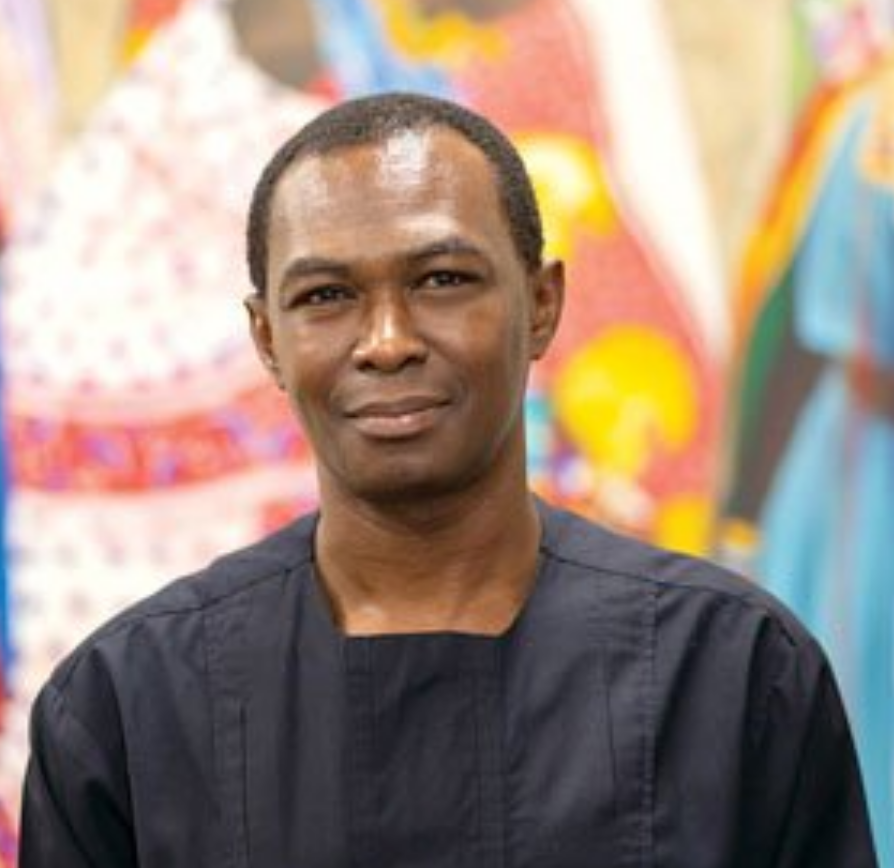
- Prof Ogundiran, PhD, FNAL, FSA, FAAN is Cardiss Collins Professor of Arts and Sciences, Professor of History, and Courtesy Professor of Anthropology and of Black Studies at the Northwestern University, USA. He delivered this lecture during the investiture of the 14th Vice-Chancellor of the University of Ibadan, Professor Peter Olapegba, on November 2, 2026





One comment on “The African University in a New World Order: Imperatives of knowledge sovereignty and relevance ”