By Toyin Falola
On October 9, 2026, an ad hoc delegation of scholars and activists descended on the home of Comrade Hassan Adebayo Sunmonu in his lovely Osogbo residence. Comrades to comrades; religious fundamentalists to comrades; entrepreneurs to comrades, etc. The goodness of the heart of Mrs. Sunmonu, comrade in arms, can take it all, with an expansive garden of fruits and vegetables, trees and shrubs that can supply food to humans and non-humans.
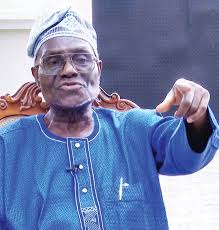
I appointed myself as the Chair of the delegation. Never deficient in what to say at any time, even at 2 AM when the conclave is set to meet, I chose the theme of the “unfinished struggle for workers’ dignity in Nigeria.” I traced the disaster to the 19th century, conceptualizing the debates around the wastage of human populations to allow a tiny elite to accumulate. Wealth accumulation then structures society into classes (Marxian conceptualization) and social clusters (Pierre Bourdieu social clusters). I argued that these structures remain. The work of Comrade Sunmonu remains incomplete. He did not respond to the sadness in my narrative, although Professor Ademola Dasylva, the self-appointed moderator, promised Sunmonu that he would see the promised land in his lifetime.
The Comrade is a believer in the fact that the fight for workers’ rights extends beyond pay and perks or the circumstances under which they work. For him, it is always a matter of justice: who controls the wealth created within society, who gains from the progress of the nation, and why do people who keep the wheels of the economy turning continue to be its most marginalized members?
Born on January 7, 1941, in Akim-Eshiem in present-day Ghana, Sunmonu, born a twin, was the eldest child born to a Nigerian family. His father migrated from Osogbo around 1925 to earn a living in Ghana as a cocoa farmer but later returned to Nigeria with his family. This migration developed the social context in which Sunmonu’s education, religion, and political ideologies would be formed. He received his education at schools in Osogbo, which included Ansar-U-Deen and All Saints School, and then later Osogbo Grammar School. His education process did not occur without hiccups; financial problems forced him to stop going to school. He returned to Ghana in 1956, with help from Alake Ladapo Ademola, whom Sunmonu and his brother had met when the king was in exile in Osogbo. Coming back to Nigeria the following year, Sunmonu managed to gain admission into the technical school in Yaba, where he graduated with a diploma in civil engineering.
At Yaba, the young Hassan took part in societies such as the Muslim Students Society of Nigeria (MSS), the National Association of Technological Students, and the National Union of Nigerian Students. He was a student union president at Yaba and a leader in other national students’ organizations. But the Muslim Students Society was the first organization that provided him with the practice of what being a union member means. As the branch secretary of this organization, he organized religious lectures, planned activities, and took care of the basic needs of the students during Ramadan. Arranging meetings, mobilizing delegates, and organizing support for Osogbo to organize the MSS National Conference helped him to learn how to rally and mobilize people around shared goals. His zeal for activism developed from the garnered experience and realization that what was beyond individual reach could be achieved through collective action. During his tenure in the Federal Ministry of Works, Sunmonu took the important step from student leadership into trade unionism. In his role as a technical officer in this ministry, he joined the Association of Technical Officers and later served as its secretary at a time when the organization faced discrimination.
This episode made a trade unionist out of Sunmonu. The experience exposed the limitations of professional associations that lacked institutional recognition and the legal framework required to bargain collectively. This experience became characteristic of his future life, where it was necessary to translate any complaints into demands and to have an institution to confront the authorities. When the NLC emerged as a unified national labor center in 1978, Sunmonu became its pioneer president. The formation followed a period of considerable fragmentation within Nigerian trade unionism.
According to Sunmonu, the unification process that took place at the very inception of the NLC was plagued by conflicts arising from representation issues, ideological conflicts, and controversies concerning which group would control the emerging institutions; further complicated by allegations of foreign influence and attacks on the unification process, which resulted in intervention by the government and, consequently, the Adebiyi Commission of Inquiry as well as imposed life bans on eleven trade union leaders.
His tenure as the leader of the NLC was therefore characterized by the need to form an organization which would be able to withstand political pressure and at the same time be accountable to its members. One of the major achievements that the Congress accomplished was the struggle that it faced in 1981 against the Shagari government over the workers’ demands for better wages and conditions. After diplomatic efforts failed, he led a strike action to secure a specific amount of money and was part of a charter that called for a minimum wage, among other things. Over the years, Sunmonu has participated in efforts to reconcile rival labor groups and chaired a seven-member reconciliation committee with Adams Oshiomhole serving as co-chairman. This committee worked for approximately fifteen months but could not secure a settlement.
Sunmonu directly criticizes Nigeria’s development through its unequal distribution of sacrifice. He feels that the government asks the masses to suffer economically without trying to curb their political power or improve the quality of life for the common man. He criticized the use of policies that are like those of the International Monetary Fund and the World Bank based on his previous experience of opposing structural adjustment programs while he was working with the trade unions in Africa. To him, the problem is not whether the economic policy ensures growth or stability; the problem is who is being protected by such a policy.
He particularly highlights the increase in the prices of petrol, gas, and electricity as a strain on the people. An increase in the cost of production is a reason why plants might either shut down or scale back operations; employment would be harder to get, and employees will find it hard to manage their living standards. These examples indicate the drawbacks of analyzing development in terms of economic figures and the presence of democracy. While elections and changes in government are important aspects of political processes, they don’t automatically ensure economic stability, access to services, and equitable sharing of the country’s resources.
Development from the point of view of workers means it is something which should be felt by them daily. This means it should be seen in terms of salaries that are sufficient to fulfill their basic requirements; job opportunities that provide dignity and security; pensions that sustain them after retirement; and state institutions that don’t make citizens spend their money on things that should be provided to them collectively. Sunmonu’s objections to unequal sacrifice are therefore in tandem with his wider argument about political accountability that leaders who demand sacrifice from citizens must demonstrate that public office is exercised in the public interest.
His experience within the Organization of African Trade Union Unity, where he served as general secretary for twenty-six years, reinforced his conviction that Nigeria’s difficulties belong to a wider African political economy. He opposed structural adjustment programmes and supported efforts to articulate alternative approaches to African socioeconomic development. Even though his criticism of international financial organizations is part of his political and economic stance, it sheds light on an old dilemma in the African development discourse about how to ensure economic stability without compromising the jobs and livelihoods of the people. Hassan Sunmonu leads a life that reveals the unfinished business of trade unionism. His life proves the power of negotiations, the significance of independent institutions, and the power of workers’ influence in national politics. At the same time, it highlights the dangers of an organization whose success is dependent on its unity but which at the same time can be endangered by internal rivalry.
In the case of Nigeria, the question has always been whether the prosperity of the nation will lead to the provision of security and dignity to the workers, pensioners, and the unemployed. Sunmonu Hassan, as an individual, provides a template based on social justice, accountability in government, and the rights of workers to be involved in decision-making concerning their well-being. He led a generation that secured a minimum wage, recognition of workers’ organizations, and protection of democracy. The present generation, however, is faced with the task of safeguarding these achievements and restoring the unity and reputation needed to handle economic challenges.
My delegation departed with words and seeds. The words and seeds will germinate, the metaphor that Professor Ademola Dasylva used in his closing statements. We become the fruit scatterers, throwing the small seeds of ideas that may grow into revolutionary trees.
A luta continua!