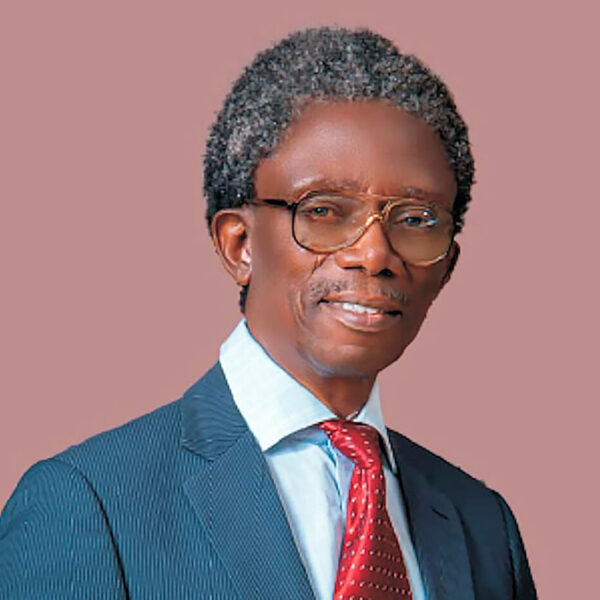
By Prof. Ademola Omobewaji Dasylva
This essay is, in part, a celebration of the newly inaugurated Alaafin Institute of Yoruba Studies at the Emmanuel Alayande University of Education, Oyo. It took place on Tuesday 14 July, 2026. It is also intended to complement the thematics of Mythology, and the salient points raised both in the preliminary statements by the keynote speaker, Emeritus Prof Toyin Falola, and published in the media, followed closely by the subsequent powerful keynote address delivered at the august occasion by the eminent scholar.
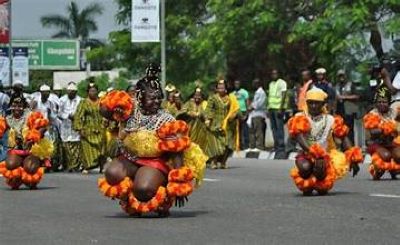
((Before I go on, however, let me mention, in passing, but for the maturity and discipline demonstrated by both the organizers, and the very cultured invited guests, an extreme patience taken for granted by some leaders and culhttps://us.wps.com/cms/docs/d/cbEaaglIXlpxBEHu?sa=601.1074tural icons, the well organized inauguration event of a foremost Yoruba Cultural Institute could have been thoroughly messed up. Courtesy of the usual “Nigerian thing”, widely referred to as, “African time”. The event was scheduled to begin at 9:00 am, and almost all invited dignitaries, including the aged retired Bishop (Prince) Ladigbolu, among others, were already seated as scheduled in the Programme of Events. The arrival of His Imperial Majesty Oba Akeem Abimbola Owoade was scheduled on the programme bulletin for 9: 55 am. However, the event had to be kept on hold, courtesy of the Alaafin Owoade, who arrived the venue at 12:20 pm. In other words, people, including yours truly, were kept waiting for over three hours before the event finally took off. Perhaps it wouldn’t have mattered much had other important and peripheral activities including cultural dances, been allowed to fill up the gap pending the Alaafin’s arrival, but no. Everyone was kept waiting and wondering what could have taken the monarch that long to attend to a great honour bestowed on the revered Throne of the Alaafin and Ancestry, just to underscore the significance of the royal institution in the Yoruba Obaship history. Unfortunately, not a word of apology for the lateness of the Imperial Majesty and his entourage, either by his spokesperson or directly by His Imperial Majesty! I guess, perhaps that some folks might assume that his imperial royalty owed no one an apology on that special occasion, perhaps not. But as a teacher of culture, a proud Yoruba, and an advocate of our rich African cultural heritage, I found that rather strange and incomprehensible. I do know that many uncultured Nigerian politicians who have refused to outgrow their adult delinquency regularly do that a lot and take the people they are meant to serve for granted. However, may I say in all humility, it is least expected of a foremost Yoruba monarch, a significant institution that embodies Yoruba cultural values and the requisite discipline. To whom much is given much is required. Again, in all humility, I stand to be corrected. Now back to the main discourse on Myths and Mythology.
I read, and also listened to, Emeritus Prof. Toyin Falola’s pre-lecture publication, and his public lecture, entitled, “Yoruba Mythologies and their Relevance Today,” of Tuesday 14 July, 2026.
The pre-lecture highlights could be summarised as follows:
According to the Emeritus Prof., Toyin Falola, among other things, mythology is one of the oldest and most profound traditions of human intellect, and that every society in the world does have mythologies peculiar to its reality. He called attention to the ongoing renewed attention on indigenous African knowledge systems as a rediscovery of its rich intellectual traditions, the resources of which could be exploited maximally to Africa’s advantage, but which colonialism taught Africans to ignore or neglect. The resilience and invincibility of Mythology as a significant subset of the indigenous African loric traditions, is what the erudite scholar did cite in the case of the African Diaspora. Falola argued that despite the inhuman mistreatment occasioned by the trans-Atlantic slave trade and forced migration, as well as the schemed agenda by the Western hegemons to subvert the robust African cultural dynamism, and subject it to cultural miscegenation, the Yoruba cultural heritage has survived in Brazil, Cuba, Trinidad, Haiti, the North America and other places across the globe outside the country of origin. The traditions have survived, been retained and sustained the representation and interpretation of mythological characters by modern African writers who have constantly exploited the rich resources of mythology in all the generic literary forms, including the new media. The new media has taken a further step in the movies, for example, in the use of indigenous African cosmology to explore the possibility of future worlds. This way indigenous loric traditions, including ain Mythology, keep developing along with society. The survival of mythology is sustained and maintained by man’s characteristic curiosity for meaning and purpose in his cosmos. It inspires humankind to study history as a repository of eternal inquiries. This is central to the whole purpose of mythology deployment, a questing tool in literary engagements.
Similarly, here, briefly, is our take home from Prof Toyin Falola’s keynote which I have tried to summarise as follows:
The keynoter explained that, Mythology (and Mythognosis) defines human civilizations, and that its relevance becomes all the more important in the way succeeding generation is guided to determine, interrogate, navigate, and maximally exploit the resources of the world it inherits, to its advantage.
He emphasised the need for Preservation and Mobilization of the loric traditions including Mythology; and the creation of a movement or a vanguard of cultural advocates to generate requisite awareness and an endearment to indigenous cultural legacies for sustainability. He argued that without such a dedicated movement cultural advocacy would lead to nowhere. In conclusion, he emphasised, again, the need to not see Mythology as something of the past, but as something that must be allowed to grow with society hence the need for development of skills as Corporate or Organic intellectuals. This means that individuals should be trained, even from their childhood, to develop such skills in cloth weaving, cloth dyeing, drum and pottery making, hair plaiting, wood craft, bronze and brass casting, poetry, theatre, dancing, and film production, among others.
The keynote concluded with a suggestion on the possibility of establishing a Royal Museum and Library where royal dresses, paraphernalia and props, records and writings of past Alaafins are archived for the public to access, and engage.
Xxxxxx
I find Prof Falola’s lecture, as usual, very comprehensive, profoundly engaging and quite apposite, in particular, to a seemingly wanton and wanderer-generation, unfortunately, our generation. It is an immense effort on the part of the keynoter to enlighten this generation on the relevance of Yoruba Mythologies, today. Let me begin where the keynoter stopped. I hope to complement his great effort by further problematizing, or compounding, the thematics of the discourse and widening the scope to address basic assumptions often taken for granted.
Let me explain mythology from another perspective for clarity. A school of thought defines, “Mythology” as “an unreal situation, an impossibility.” I guess, that assumption is relative, and also problematic. How unreal, and to who? It cannot be unreal, or impossible, to the generation that owned the narrative(s). Perhaps, it may sound unreal, or an impossibility, to subsequent generations that inherit the narratives referred to as myths. I hope to shed more light on this perspective shortly.
Another school of thought, to which I belong, believes that Mythology is a body of narratives, a significant and conscious effort on the part of the human mind to interrogate, engage, question and interpret reality. Often, it is used to construct, re-construct or deconstruct a real phenomenon, for the purpose of inference, to give logical and intelligible meaning to a reality that is hardly explainable. Mythology does this by generating a narrative that attempts to explain a given referent, or reality.
Usually, it is a way of engaging a phenomenon that is seemingly unexplainable. It is an attempt to provide answers and meanings to life’s intricacies. It is used to set moral standards that ultimately make human society liveable, and provide requisite philosophical hermeneutics as a guide and a lighthouse. All of this falls within what is generally regarded as “Loric traditions”, or simply, “Folklore”.
Folklore (Oral traditions), or Loric traditions
Folklore is not synonymous with folktale, rather it is a body of narratives and practices that include, the indigenous African worldview (or the African pluriverse/cosmos as encapsulated in, for example, the Yoruba Ifa divinatory corpuses); religion (the conscious or awareness of the Numinous Reality, as in Yoruba- Olodumare, and how the people relate to, and interact with that Reality); Myths, Legends, History; Orature – (as in oral performances: narrative and songs, poetry and drama). Each constituent of the African loric traditions contains a body of knowledge and narratives, that subsequent generations reduced to myths in a rather facile, but interesting manner.
Mythology, I must quickly add, is not a single or monolithic bloc, rather it has its taxonomy, or classificatory trajectories, like the sacred (exclusive) and non-sacred (inclusive); the hegemonic and non-hegemonic, the popular, etc. In other words, Mythology is much more complex than we have often agreed with, or made to believe. The bottom line is the fact that mythology rightly defines and provides meaning to different aspects of human cosmos and reality, its philosophy, its hermeneutics, its spirituality, environment, ecosystem, the tangible and the intangible, etc.
In Orature (or Oral literature), under folk narratives, for example, some indigenous Yoruba folk narratives provide clues to philosophical enquiries. This is not peculiar to Yoruba alone; all human societies are familiar with this subgenre of folktales. A good example in relation to the subject of Myth or Mythology, is the folktale classified as aetiological, they provide answers to the “why, how, when, which or what, etc, of a phenomenon: why the tortoise’s back is corrugated, or why a tortoise is baldheaded, or why the leopard has a pair of perpendicular face marks; or why the sky is so far from the earth, etc, etc).
However, outside aetiology, there’s another important dimension to mythology which although was mentioned, again, in passing, by Toyin Falola, that needs to be examined in detail to understand and appreciate the point the keynoter was trying to make. This is because that aspect of mythology reveals something about every generation weaving its own body of narratives and the failure of subsequent generations to measure up to the psychosocial profundity, deftness and deep resources of previous generations that owned the stories or body of thoughts that are called Myths today. That critical gap or lack of firsthand information about those narratives we tag as Myths, today, simply reminds us of our inadequacies and limitations and how time and distance from “the centre,” (that is, from original owners of the experience and narrative we call myth today), keep widening the gap.
From Narratology to Mythology
The truth is that most of what we classify as mythical today were not myths to the generation that owned them. Let me break it down a little further: imagine ten generations ago, a video call on an android phone would have been a myth; so it would have been unthinkable. Similarly, it might appear mythical to have human beings walk physically on the Moon, a hundred years ago. To this end, I would argue that our reality today, and shared experience might be tagged something mythic in some generations to come. The AI that was made reference to, is part of our weird reality, they are unusual, albeit not unreal, not an impossibility, and not a myth!
Right now the so-called Gen-Z marvelled when they see pictures of the first generation of the analogue telephone and subsequent analogue phones. To the generation that produced and used the analogue phones, it was not a myth, it was a lived experience, a reality. But to the Gen-Z that couldn’t fathom the existence of analogue telephones, it is a myth to them. Gen-Z therefore, represents a generation too sophisticated to believe, or mentally process the possibility of such a product, therefore, to them it is a myth. Therefore, what we call Myths today, are largely real and lived experiences to the generation that owned the narrative. To them they aren’t myths. Analogue telephones were no myths to my generation, we used the phones to communicate, they were real, and not mythical to us. But for Gen-Z which got to know about the analogue telephones in books, or the museums, they could be aggregated to the mythic.
In other words, those stories that were real, those narratives and thoughts that were also real to the generations that owned them, have become unreal to many generations that inherited the stories years later. This is because the succeeding generations could neither comprehend nor mentally process them as real, because of their seeming unintelligibility. Therefore, they described such stories as, “interesting but incredulous”, and the stories are tagged, mythical. That development is not peculiar to Africa, it has a pluriversal dimension, it is a common way all societies, regardless of colour, creed or geography, respond or react to a phenomenon that evoked curiosity, which societies acknowledged and developed appropriate narrative to explain. Unfortunately, subsequent generations, all over the world, hardly understand the informing narratives of the body of thoughts, hence they are trashed as mythical.
A few examples
Every society has its creation story. However, let me cite the one in the Bible which I believe many of us are likely to be familiar with.
In the Bible, (Genesis 2: 18 – 22), the creation story, and in particular the creation of Eve with a rib from Adam’s side, for many years, that story remains a myth from the Jewish tradition. Not until modern science, some four or five decades ago engineered something phenomenal to warrant a new lexicon, of the word “clone” or “cloning” in clinical science: it is a means by which a cell from an entity can be used to produce a replication of the same entity, state, and kind. Therefore, going by the new development and additional knowledge, it was possible that Eve was actually cloned from Adam, the man. That sounds more real and less mythical, now.
Similarly, 2Kings 2:11 describes how Elijah the prophet was taken into heaven by a chariot of fire. Understandably, chariots were means of transportation, exclusively for kings, emperors and war Generals. A form of car or cat pulled by horses, and the number of horses also determined the speed of the chariots. In other words, chariots were useful non-motorized vehicular weapons of war, ridden by war Generals in the ancient war-times. So, the writer saw at best, what he understood to be a fast chariot propelled by “horses of fire,” which took Elijah into heaven. That sounded incredible like a great myth for a long time.
But by the time the space shuttles began to surface, and to explore the space in the late 1950s through the late 1960s, (remember the Apollo 1 – 13 or so?). It was Apollo 11, that made the incredible to happen; it landed two astronauts, Neil Armstrong and Buzz Aldrin, on the Moon on 20 July 1969. The two men actually walked the surface of the Moon. It was no longer a myth. Of what relevance is the narrative? It provided a clue to the Elijah and the chariot of fire. Now that we know that space shuttles always take off with a cloud of Jetfire, and that the writer in 2Kings 2:11, perhaps was trying to describe, the first ever motorized space-shuttle, at a time such words like, “space shuttle,” or “space rockets” did not exist. So, the narrative was simply tolerated in the realm of the mythic. However, the experience was real to Elisha, the prophet’s servant, but sounded like, “an unreal situation, an impossibility,” to subsequent generations; therefore, it was considered a myth.
Similarly, examples of similar “mythics” abound in ancient and contemporary literature across the globe. For example, in the Anglo-Saxon period, “Beowulf” a very popular romance/epic of the medieval English society, recorded that the hero, Beowulf of the Geats, comes to the aid of Hrothgar, king of the Danes, whose great hall, Heorot, is plagued by the monster Grendel. Beowulf kills Grendel with his bare hands, then kills Grendel’s mother with a giant’s sword that he found in her lair. Although Beowulf is mortally wounded, he succeeds in liberating the society from periodic devastation of the monsters.
That encounter in the narrative was considered a myth, but no, it was real. The monster with eight eyes and eight long hands devastating the marine community, was found to be a gigantic octopus that belonged to the Cretaceous age, that was the last generation of the gigantic reptiles like Dinosaurs that are now extinct. To that extent, the narrative was not a myth to the King of Danes and his country. However, it remains a myth to succeeding generations, because like most other myths the narrative remains incredulous, and unreal.
In our contemporary time, the word Mammy-water was a myth until it became an unusual phenomenon and a reality. Those that encountered it tried to sketch down what they saw, a creature that was half human and half fish, but it sounded and looked unintelligible, so it was tagged a myth. Today, mermaids are no longer mythical figures, they are real.
Furthermore, when in the Odù Ifá narratives we are told how the deities descended from Ìsánlú Òrun to Ìsánlú Ayé, (from heaven to the earth) through a path in the forest which Ogun helped to clear with his iron sword, as against the silver sword of Òbàntálá which was rather fragile, to enable the deities have a clear passage to the Earth. To the original generation that owned the narrative, it was real, and not a myth. To generations after, it is tagged a myth, because it sounds illogical and unbelievable.
Mythology and Sustainability: Yoruba Culture and the Future of Mythography
Fortunately, the Ifá Corpus has been wholly digitised, that is one way of keeping the Ifá data intact, but by its very nature, the Ifá Corpus has an open-ended structure; therefore, the codification and digitisation must allow growth appropriate to additions in history, medicine, etc., of the “Ese-Ifá” (verses) along with the peculiarities of the succeeding generations that inherit the Ifá Corpus.
Similarly, as suggested by Toyin Falola, there’s a need to consciously and formally initiate diverse and appropriate skills, in particular, on how AI could be appropriated to create, for example, cartoons that tell home-grown African history and tales, protagonist trickster characters, and a narratology that embodies African cultural values and philosophical hermeneutics. Such a development, if encouraged and designed, would definitely be more relevant to African context and values than what African kids could ever gain or learn, if at all, from the Western “Tom and Jerry”, etc., and other non-African cultures.
Here is a note of caution, however, although the new media has supported indigenous Orature, including drama, poetry and oral narrative in engendering portability, mobility and broadened visibility, there is no way it can replace actual performance in real time and space. Besides, it has also drawn a wedge between the original or primary audience which formed a body of extended participants and the rather passive secondary audience or observers. What becomes apparent and glaring is the difference between an actual context of an indigenous oral performance with its characteristic active cum-participatory primary audience on the one hand, and on the other hand, a recorded performance in the new media creation with a non-participatory and passive observers, which is not an audience in a strict sense.
Furthermore, the new media and AI have more or less, literally taken away the very soul of the performance which hitherto was sustained on its natural setting and immediacy, its active spontaneity and mercuric nature that allows scenes, characters, moods and modes to easily switch and move from one generic form to another. This is in addition to the direct participation, interjections, motivations and criticism, etc., that are characteristic of the primary audience in a major oral performance. By the time the art is captured in any form of the new media, it is fixated, it freezes, the spontaneity is gone, and the performance seen through the lens of the cameraman is reduced to a relic piece of art, and now watched and admired, not as a living piece of art that should engage the same audience as active participants.
Perhaps we may, some day, through this kind of discourse catch up with the depth and profundity of the philosophy, the hermeneutics and mythology of the ancient African civilizations. Let’s keep the discussion alive. I come in peace. My 2 Kobo.
DAO